The purpose of the African Women in Cinema Blog is to provide a space to discuss diverse topics relating to African women in cinema--filmmakers, actors, producers, and all film professionals. The blog is a public forum of the Centre for the Study and Research of African Women in Cinema.

Le Blog sur les femmes africaines dans le cinéma est un espace pour l'échange d'informations concernant les réalisatrices, comédiennes, productrices, critiques et toutes professionnelles dans ce domaine. Ceci sert de forum public du Centre pour l'étude et la recherche des femmes africaines dans le cinémas.

ABOUT THE BLOGGER

My photo
Director/Directrice, Centre for the Study and Research of African Women in Cinema | Centre pour l'étude et la recherche des femmes africaines dans le cinéma

Translate

Search This Blog

Showing posts with label Kenya. Show all posts

01 December 2025

The African Women in Cinema Blog commemorates United Nations World AIDS Day


As highlighted in past commemoration posts, African women in cinema often use the visual media as a tool for awareness building as it relates to matters that touch their societies and burning issues that effect Africa.

In this regard the initiative Scenarios from Africa had as objective to give young people a unique occasion to learn more about HIV/AIDS. The 2011 edition demonstrated the extent that African girls and young adults seized this opportunity to tell these stories. Among the 25 frontrunners 17 were girls/young women--the youngest 12 years old. Furthermore, among the awardees of the three grand prizes two were young women.

Burkinabé Fanta Nacro has played an important role in the above initiative, as prominent African cineastes adapted films using these scenarios: A Call to Action, A Love Story, A Ring on Her Finger, The Champion, Iron Will, Peace of Mind, Never Alone, The Reasons for a Smile, Tiger Tigress. Also from the Series, Cameroonian Kidi Bebey’s Looking for a Brave Man explored relationships in the age of AIDS. A young woman seeking a serious relationship demands that her partner act responsibly which entails taking the AIDS test.

Fanta Nacro’s filmography also includes the 1998 short film, Le Truc de Konate (Konate's Thing). The comedy employed as a means of consciousness-raising proved very popular with the Burkinabé public, intermingling an established distrust of new concepts and old-fashioned masculine virility and honour with female consciousness.

With a more solemn tone, Tsitsi Dangarembga of Zimbabwe relays the tragic costs of AIDS in Everyone's Child, directed in 1995. The film focuses on the devastating consequences for the children who are left to fend for themselves after the AIDS-related death of parents. On a joyful note, in Zambian Musola Kaseketi's film Suwi, the young Bupe finds a happy home, while Tanzanian Beatrix Mugishagwe’s Tumaini tells a story of hope.

Kenyan Wajuhi Kamau, of the Film Production Department of the Educational Media Service of the Minister of Education, emphasises the effectiveness of video as a means of educating people about a range of issues, from AIDS to family planning. Using both the documentary and drama presentations, the objective of the agency is to allow people to see themselves reflected in the images. "When you see yourself, you see your situation, then it is easy to remember and change attitudes and behaviour." Zimbabwean Prudence Uriri has also focused on issues related to AIDS and health in general. The Unesco-commissioned Madizela and Samora (2003), and Life (2002) produced by Rooftop Promotions, are two AIDS-focused films directed by Uriri. She sees her role as a filmmaker to open a dialogue regarding the problems that people face, and in so doing they may be better informed.

10 February 2025

Women in Films Awards Kenya


Women in Films Awards Kenya


Now in its 6th year the aim of Women in Films Awards Kenya is to celebrate the drive; spirit and diversity of the woman filmmaker

Women Films Awards director Dr. Susan Gitimu describes its purpose: “There’s a need for a festival that affords women of any background the chance to be showcased in a truly empowering light.”

Description from website: https://beyondthefilm.org/wifawardskenya/
“Beyond the Film” is an organization dedicated to recognizing and celebrating the outstanding contributions of women in the film industry. Through our annual Women in Film Awards, we strive to illuminate the remarkable talent, creativity, and resilience of women who have made significant strides in various aspects of filmmaking.

Awards Objectives : https://beyondthefilm.org/wifawardskenya/
1. To celebrate women perspectives through film
2. To encourage women filmmakers in Kenya present the world as they experience it through filming the world.
3. To empower women in Kenya to embrace filmmaking.
4. To create a market linkage for women filmmakers in Kenya to the larger market for film i.e. distributors (online, mobile, TV, and local retail market) and consumers/viewers.

05 December 2024

From Kaddu Beykat to Pumzi: Commemorating World Soil Day, 5 December


The Food and Agriculture Organisation of the United Nations (FAO) Commemorates World Soil Day on 5 December:

Soils have been neglected for too long. We fail to connect soil with our food, water, climate, biodiversity and life. We must invert this tendency and take up some preserving and restoring actions. The World Soil Day campaign aims to connect people with soils and raise awareness on their critical importance in our lives.

The environment has long been a theme that African women in cinema have addressed in their work, from Kaddu Beykat (1975) by Senegalese Safi Faye to Pumzi (2009) by Wanuri Kahiu of Kenya. 

In Safi Faye's Kaddu Beykat the story unfolds through the backdrop of an ongoing drought in the village, causing economic upheaval as groundnuts are its sole crop. In the film, Safi Faye depicts the hardships and problems of a Senegalese peasantry bent under the yoke of an agricultural system dominated by groundnut cultivation. A culture that is imposed on them to the detriment of the food crops that allowed them to live. She challenges the authorities, but also proposes a reflection on the future through reforestation and the protection of nature.

In the 1990s, Burkinabé Franceline Oubda directed her camera on themes around the environment in her documentary film, Femmes de Yatanga, which explores the initiatives of the Association Six 'S' ("L'Association Six 'S'"), based in Burkina Faso. The Association Six 'S' in French illustrates the first letter of the words, all beginning with 's', which describes the objective of the group--savoir se servir de la saison seche en savane au Sahel (to know how to make use of the dry season in the savanna of the Sahel). Her film Femmes de Yatanga portrays the women's efforts to survive the desertification that is threatening the region by using alternative methods of rearing sheep.

Wanuri Kahiu was inspired by the late Nobel Prize laureate and compatriot Wangari Maathai, whose Greenbelt Movement challenged Africans to replenish the earth by planting trees, combatting deforestation and soil erosion.

Talking about what motivated her to make the film Pumzi, Wanuri Kahiu had this to say: “Wangari Maathai has been talking about this issue for years and we never heed her advice so I am not here to tell people to conserve the environment alone, I am showing them what will happen if we don’t. I show a land where people recycle their own water to survive.” (nation.co.ke)

And thus the African Women in Cinema Blog celebrates the importance of soil, as it highlights the work of African women in cinema who endeavor to raise the public's awareness of soil and its importance to humanity and the environment. 

12 April 2024

A Handbook of Women Filmmakers in Kenyan Cinema

A Handbook of Women Filmmakers
in Kenyan Cinema
 
A Handbook of Women Filmmakers in Kenyan Cinema seeks to situate scholarship and contributions of women filmmakers in Kenya and global film studies. It espouses diverse methodologies, critical tools, and theoretical perspectives in interrogating women filmmakers in the country.

This ground-breaking book is edited by Dr. Susan Gitimu Lecturer at Kenyatta University and Women in Film Awards Director (WIFA) as well as Dr. Charles Kebaya Senior Lecturer at Machakos University. The edited volume aims to bring together critical works focusing on women filmmakers in Kenyan cinema. The book is envisaged as a comprehensive volume comprising analyses of film oeuvres of various women filmmakers, essays on women film directors, producers, actresses, and scriptwriters. The volume transcends traditional approaches of looking at films made by women filmmakers as ‘feminist’ cinema but focuses on various issues articulated and canvassed by women filmmakers.

The book chapter contributors presented their chapters during a 3-day conference held at Norfolk Hotel on 3rd -5th April 2024. The conference was organized with the support of BTF, WIFA and the German Federal Ministry for Economic Cooperation and Development (BMZ), through the Deutsche Gesellschaft für Internationale Zusammenarbeit (GIZ) GmbH.
 
Source: Women in Film Awards Kenya (Facebook)
Also visit the website: Beyond the Film: https://beyondthefilm.org
 

04 April 2024

Carolyn Khamete Mango. The presence of women in the Kenyan film industry: applying postcolonial African feminist theory. PhD thesis. 2023

Carolyn Khamete Mango.
The presence of women in the Kenyan film industry: applying postcolonial African feminist theory
PhD thesis, University of Glasgow
2023

https://theses.gla.ac.uk/83403/

ABSTRACT
In this study, I examine the presence of Kenyan women in the film industry through the lens of postcolonial African feminism. Situating the study in this theoretical framework heightened the awareness that ideologies of womanhood and struggles against gender oppression intersect and cannot be analysed without considering the contextualisation of womanhood. Postcolonial African feminist theory reflects that issues that affect women in each place and time are different (former colonies and western regions). This study explores and uses the afro feminist lens to analyse the responses by Kenyan women filmmakers to comment on filmmaking in Kenya. The film industry offers an important arena where manifestations of African feminism can be explored, as espoused by the women filmmakers in this study: Matrid Nyagah, Jinna Mutune, Ng’endo Mukii, Wanuri Kahiu, Judy Kibinge, Dommie Yambo-Odotte, and Anne Mungai.

By adopting a qualitative research design using face-to-face semi-structured interviews, I examined the filmmakers’ career paths, motivations, perceptions, challenges, and barriers to getting into and remaining in a male-dominated industry.

The thesis reveals that the level of Kenyan women’s representation in the film industry on the global scene was proof that the women were empowered, competent, talented, and able to tell their stories through their lived experiences.

The study also identifies barriers and challenges that impede their reach to a wider audience. Key among them were the lack of proper film schools in Kenya that teach the requisite content, the ongoing patriarchal system, the lack of defined film culture, a lack of a government policy on film, lack of government support, lack of funding, and poor marketing and distribution channels, among others that seem to truncate the full potential of women in the film industry.

I argue that Kenyan women filmmakers have excelled, given an excellent account of the stories they tell from their lived experiences. These filmmakers’ films not only deal with women’s issues, Africa, war, famine, disease, and the girl child alone but also seem to focus on neo-feminism (as defined by Obioma Nnaemeka) and tackle subjects on sexuality, female emancipation, mother-daughter relationships, HIV/AIDS, drugs, science and technology, post- election violence and terrorism. Neo-feminism offers space for women filmmakers to work alongside men since it advocates for negotiating with them to achieve hard ideals.

The study found that though women in the Kenyan film industry did not agree they were working within a feminist framework, they objected to the western attitude toward feminism. It is also found that whereas some of the women filmmakers trained locally, the training they received abroad contributed to their being better filmmakers. Indeed, the Kenyan film industry has offered mixed signals as regards supporting its women filmmakers. While the government has faltered, the women filmmaker's grit and sense of purpose have helped them stamp their presence in the film industry both locally and internationally. Also, the study revealed that despite the important role women filmmakers play in the film industry, there was a lack of support from the government. However, family members continued to provide both financial and emotional support to the women filmmakers to live up to their dream. In addition, the lack of a national film policy to regulate the film industry meant that gender was not mainstreamed in it. Women filmmakers continue to negotiate for space through their passion, supporting and mentoring each other, recognising other women’s efforts in the industry through film awards and establishing funding opportunities specifically for women but also for men.
 

28 January 2023

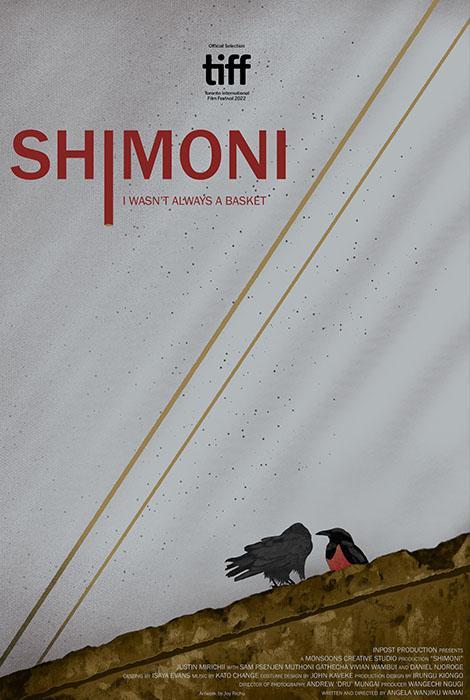
Angela Wanjiku Wamai: Shimoni - Official Selection - FESPACO 2023

Angela Wanjiku Wamai
Shimoni

Kenya - 2022 - 97min - Fiction


"We have the responsibility to ask difficult and uncomfortable questions. We have the responsibility to make people look and listen, no matter how much they don’t want to. It is our responsibility to give people the images to look at and enable them to listen to voices they haven’t heard before." (Women and Hollywood)

Synopsis
Geoffrey, a teacher newly released from prison renegotiates the confines of the physical world while forced to face his nightmare in the flesh.

Angela Wanjiku Wamai
A film editor based in Nairobi, Kenya, Angela Wanjiku Wamai was recently awarded best film editor by the Women in Film Awards – Kenya. In 2018 she wrote “I Had to Bury Cũcũ,”which premiered at the Clermont-Ferrand International Short Film Festival. Her debut as director was with the short film, Dad, Are You Ok?, which premiered at the International Female Film Festival Malmö. Shimoni (“The Pit”) is her first feature film. 

14 January 2023

Wanjiru Kinyanjui: A Lover & Killer of Colour - The Battle of the Sacred Tree - Berlinale Forum Special Fiktionsbescheinigung 2023

Wanjiru Kinyanjui
Berlinale
Forum Special Fiktionsbescheinigung 2023


Wanjiru Kinyanjui has been fascinated with storytelling since she was a young girl, her imagination visualizing the stories that she read. It is not surprising that her passion brought her to the doorstep of the Deutsche Film und Fernsehakademie, the German film school where she could "plunge into a world full of characters and their stories." She had this to say about her experiences there:


The film school was definitely a great opportunity for me because we had no theoretical exams. Our papers were actual films and we could, therefore, experiment on each film we made after every seminar or workshop. Some cinemas in Berlin provided us with free tickets and it was possible for us to watch as many different films as we had time for. I could choose my own subjects, my own format, and the people I would work with. In a way, it was a freeing experience. (Excerpt of interview from Sisters of the Screen by Beti Ellerson)


The Berlinale Forum Special Fiktionsbescheinigung 2023 features two of her works that were produced in Germany 


A Lover & Killer of Colour

Federal Republic of Germany, 1988

with Alida Babel

https://www.berlinale.de/en/2023/programme/202314695.html

Description

“I strike with the brush until the white canvas tears.” Wanjiru Kinyanjui’s fiction short about a Black painter in West Berlin was shot on 16mm and draws its power from its atmospheric night scenes and self-confident stream of consciousness.


A young Black woman played by Alida Babel walks through Berlin on her own. It is midnight, her heels click against the steps leading down to the U-Bahn, the train has just left, the empty platform becomes a space of anxiety. Twelve minutes to wait, the voiceover spoken by the director herself complains: “This impatience!” Wanjiru Kinyanjui made A Lover & Killer of Colour (1988) during her studies at the DFFB. This short film miniature revolves around the experience of sexist and racist harassment – and the anger which emerges in response. What can be done with all the aggression that finds no release during such humiliating moments? The film watches as rage is translated into artistic work. The night scenes alternate with footage from the young woman’s studio; she is a painter, and she writes. While she is typing, the voiceover says: “If you do not stop / insulting me / you leeches / I will kill you / in this poem.” Wanjiru Kinyanjui’s directness rejects the sort of sublimation that may have kept the anger contained – even as the wish for reconciliation remains: “Through words, my trust is repaired / on white paper”. (Source: berlinale.de)


The Battle of the Sacred Tree

Germany, 1995

with Margaret Nyacheo, Catherine Kariuki, Roslynn Kimani, Titi Wainaina, Ben Ateku

https://www.berlinale.de/en/2023/programme/202314590.html

Description

Mumbi leaves Nairobi for her ancestral village and gets into a quarrel with a Christian women’s group seeking to eradicate the remains of pre-colonial belief systems. Wanjiru Kinyanjui graduated from the DFFB with this smart comedy shot in Kenya.


Wanjiru had this to say about her film: "Well, this is the film I enjoyed doing most: I was telling a story like any other, albeit on African culture.  It is about a group of Christian women who want to be rid of the "primitive, savage and hateful past" by getting the old, sacred tree chopped down.  They cannot mobilize people to do it, so they decide to do it themselves; but before they strike it on a moonlit night, they are attacked by God's own creatures, the biting safari ants which live and thrive under the tree." (Excerpt of interview from Sisters of the Screen by Beti Ellerson)

13 December 2022

Women Digital Resilience Training - Association of Media Women in Kenya


Women Digital Resilience Training
in conjunction with Association of Media Women in Kenya, DW Akademie, German Cooperation

13-15 December 2022


DW Akademie has kickstarted a three-day training for journalists, human rights defenders, and women leaders in advancing the resilience of women in online spaces under the @WomenAtWebEA project.

Panel members:
Lorna Sempele, Moderator, Communications Consultant
Patience Nyange, Executive Director, Association of Media Women in Kenya (AMWIK)
Josephine Mirembe, Communications Consultant
Robi Koki, Communications and Media Expert

In Kenya, DW Akademie works with local partners to combat hate speech, promote accurate and independent reporting, and help make media house financially sustainable - especially in times of the pandemic.

03 February 2022

Maïmouna Jallow: Tales of the Accidental City (Kenya) - 32 Annual Cascade Festival of African Films 2022 - Women Filmmakers Week


Maïmouna Jallow

Tales of the Accidental City
Kenya
Fiction/Humor - 54 mins - 2021


Maïmouna Jallow taps into the current Zoom phenomenon to frame the ambiance for the characters and conversations that make up Tales of the Accidental City.

Synopsis
Four residents of Nairobi, stuck together in an anger management class, must explain what got them there and attempt to heal the wounds of the past. Tales of the Accidental City is a feature-length film based on an adaptation of a stage play by writer and director Maïmouna Jallow.

Maïmouna Jallow and the actors talk about the film, Tales of the Accidental City: https://www.youtube.com/watch?v=TOLMH2Wp7VU

17 November 2021

Recent Films. Joan Kabugu: Throttle Queens

Image: KBC English Service

Joan Kabugu
Throttle Queens
Kenya - Documentary - 2021
 
In Throttle Queens by Kenyan Joan Kabugu we meet a women's motorcycle club and see how their love for riding brings them joy, freedom, adventure and a sense of control over their lives.

« Throttle Queens » (Kenya) de Joan Kabugu nous fait rencontrer un club de motocyclisme féminin et voir comment leur amour de l’équitation leur apporte joie de vivre, liberté, aventure et un sentiment de contrôle sur leur vie.

***

Entirely based within Africa, Al Jazeera partnered with Big World Cinema. The team includes executive producer Steven Markovitz (South Africa), series producers Angele Diabang (Senegal) and Brian Tilly (South Africa).

«Al Jazeera s’est associé à Big World Cinema pour ce projet : il est entièrement basé en Afrique. L’équipe comprend le producteur exécutif Steven Markovitz (SA), les producteurs de séries Angèle Diabang (Sénégal) et Brian Tilly (SA).

***

Joan Kabugu is the founder of Ecila Films a production house that creates Authentic African content that focuses on women, teens and indigenous communities in Kenya and East Africa and aims to transform societies.

Joan Kabugu est le fondatrice d'Ecila Films, une maison de production qui crée un contenu africain authentique qui se concentre sur les femmes, les adolescents, les communautés autochtones et les entrepreneurs au Kenya et en Afrique de l'Est. En tant qu'écrivain et cinéaste, est qui vise à transformer les sociétés africaines.
 
Image: KBC English Service

18 October 2021

Maia Lekow: The Letter (La Lettre) - FESPACO 2021

FESPACO 2021
Feature documentary in competition
Maia Lekow
The Letter (La Lettre)
Kenya
81min - Documentary - 2019

Source: jcctunisie.org

Synopsis
Along the coast of Kenya, a frenzied mix of consumerism and Christianity is turning hundreds of families against their elders, branding them as witches as a means to steal their land. Ninety-two-year-old Margaret Kamango stands accused by her sons, while her strong-willed daughters try to protect her. This dangerous dispute is seen through the eyes of Margaret’s grandson, Karisa, who returns home from the city to investigate and is ultimately forced to choose which side he is on.

Sur la côte kenyane, un mélange frénétique de consumérisme et de christianisme retourne des centaines de familles contre leurs aînés, les présentant comme des sorcières pour leur voler leurs terres. Nyanya, 93 ans, est accusée par ses beaux-fils, tandis que ses filles de bonne volonté tentent de la protéger. Ce conflit dangereux est vu à travers les yeux de son petit-fils Karisa, qui rentre de la ville pour savoir ce qui se passe, et qui est forcé de choisir son camp.

Bio
Maia Lekow is a Kenyan musician and filmmaker. Her first film, The Letter, premiered at IDFA 2019 and was supported by IDFA Bertha Fund, Docubox, Hot Docs Blue Ice, Sundance DFP and Chicken & Egg Pictures. Maia was appointed UNHCR Goodwill Ambassador in 2013 and received an African Movie Academy Award for her song "UkoWapi" in 2009. Currently on international stages with her band, Maia & The Big Sky, Maia has also composed music hauntingly beautiful original for The Letter.
Maia Lekow est une musicienne et cinéaste kenyane. Son premier film, The Letter, est présenté pour la première fois à l'IDFA 2019 et a été soutenu par le IDFA Bertha Fund, Docubox, Hot Docs Blue Ice, Sundance DFP et Chicken& Egg Pictures. Maia a été nommée ambassadrice de bonne volonté du HCR en 2013 et a reçu un African Movie Academy Award pour sa chanson "UkoWapi" en 2009. Actuellement sur les scènes internationales avec son groupe, Maia & The Big Sky, Maia a également composé une musique originale d'une beauté envoûtante pour The Letter.

Note d'intention | Note of Intention
Husband and wife, working as co-directors, with Chris [King] on camera and Maia on sound, makes The Letter a deeply personal journey for both of them. Maia was born and raised in Nairobi, and had little connection to her father's homeland, where our film is set. Chris, originally from Australia but living in Kenya for over 12 years, found great comfort in the making of this film. Maia's approach to writing an original score for the film came from a desire to articulate the emotional complexity of the grandmothers' situation.

Mari et femme, travaillant en tant que co-réalisateurs, avec Chris [King] à la caméra et Maia au son, ce qui a fait de The Letter un voyage profondément personnel pour tous les deux. Maia est née et a grandi à Nairobi, et avait peu de liens avec la patrie de son père, où se déroule notre film. Chris, originaire d'Australie, mais vivant au Kenya depuis plus de 12 ans, a trouvé un grand réconfort dans la réalisation de ce film. L'approche de Maia dans l'écriture d'une partition originale pour le film, est venue d'une envie d'articuler la complexité émotionnelle de la situation des grands-mères.
 

13 March 2021

Super Sema. An Afro-futuristic animation series: Time to Change the World

Super Sema. An Afro-futuristic animation series: Time to Change the World

Source: Super Sema: https://www.supersema.com/

Super Sema follows the world-changing adventures of an extraordinary young girl Sema and her twin brother MB on their mission to protect their African town of Dunia from the villainous Tobor. Sema knows that with determination, creativity, and a helping hand from the amazing world of science and technology, anything is possible!

Set in an Afro-futuristic world, Super Sema is an exciting roller coaster of daring adventures, STEM inventions and kid-power to save the village from a heartless AI Robot.

01 March 2021

Ng’endo Mukii: Kesho Pia Ni Siku (Tomorrow is another day) Vimeo Stories in Place

Ng’endo Mukii
Kesho Pia Ni Siku (Tomorrow is another day)
Vimeo Stories in Place
 
Ng'endo Mukii 
Kesho Pia Ni Siku
Kenya
Documentary - 2021 - 9mins
https://vimeo.com/storiesinplace

Kesho Pia Ni Siku means "Tomorrow is another day". Njeri is a grandmother who sings hymns. She runs her own small shop in Nairobi.

She tells how she unintentionally started her business from the trunk of her 1990 Toyota, survived a fire in the market, the social alienation of divorce, and the economic calamities of Kenya, to become independent as a businesswoman and face another day.


Stories in Place: Kanyoko Boutique from Ng'endo Mukii on Vimeo.

17 February 2021

Dolapo Adeleke's "Just in Time" on Netflix, March 2021

 
Dolapo Adeleke's Just in Time on Netflix

Just in Time, written, directed and co-produced by Nigerian filmmaker Dolapo "LowlaDee" Adeleke, premieres on Netflix in March 2021. The comedy drama, shot in Nairobi, features Kenyan actress, Sarah Hassan who is the producer.
 
Dolapo Adeleke directed the popular romantic comedy Plan B, broadcast on YouTube as a Valentine Movie Special in 2019, produced by Sarah Hassan.
 
In 2016 she directed her first mini-series This Is It, bringing together a Nigerian and Kenyan cast. With YouTube as its broadcast platform, it has garnered millions of views.
 
Dolapo Adeleke is the CEO/Founder of LowlaDee Originals Inc. and the Cofounder of Giraffe Productions, Nairobi.

Plan B on YouTube [https://www.youtube.com/watch?v=d1Hii5thnhI]

This Is It on YouTube [https://www.youtube.com/watch?v=erxLaRHHPhY]

20 May 2020

RECENT FILMS. Faith Musembi: Chumba

Faith Musembi
Chuma (2019)
7min - Sci-fi

Synopsis

It is the fourth year of the Chuma infiltration in Kenya. The Chuma are an extraterrestrial species who look and speak like Kenyans. Although the Chuma have maintained a peaceful existence, the Government of Kenya perceives them as a threat and sets out to eliminate them all. (Source: imdb.com)

Bio

Faith Musembi is a Kenyan-born, South Africa-raised, US educated writer, director and editor. She graduated from Emerson College, Boston, with a Masters in Visual Media Arts. She is the founder of Faimus Films, a motion picture production company specializing in documentaries, TV shows, corporate videos and short & feature-length film and a Producer with WildEarth.TV, a live wildlife broadcaster. Her short film, Pendo, was the 2017 Best Local Language Film winner at the Kalasha International Film Festival and scooped both the Best Short Film & Best Screenplay awards under the Swahili Films Awards at the 2018 Zanzibar Film Festival. (Source: smartphonefilmcompetition.co.ke)

24 February 2020

Festival Films Femmes Afrique 2020 - Beryl Magoko: In search...

Beryl Magoko 
In Search
Kenya - 2018 - 90 min - Documentary


Synopsis

Un voyage vers la féminité...

Ayant grandit dans un village au Kenya, Beryl pensait que toutes les femmes du monde entier devaient être "excisées" en vivant à un jeune âge, une Mutilation Génitale Féminine.

Dans son documentaire dirigé par l'auteur (elle-même) In Search..., elle explore le dilemme émotionnel en parlant avec des femmes ayant vécu des expériences similaires aux siennes. Beryl essaie de découvrir, pour elle-même, si elle devrait subir l'opération de réparation, une seconde fois un voyage dans l'inconnu.

A journey towards womanhood ...

Having grown up in a village in Kenya, Beryl believed that all women around the world should undergo "excision", hence, living from a young age, a Female Genital Mutilation.

In her documentary In Search..., she explores this emotional dilemma by speaking with women who have had similar experiences to hers. Beryl attempts to discover for herself, if she should undergo the repair operation, a second time into a journey into the unknown.

Biographie | Biography

Beryl Magoko et une réalisatrice Kenyanne. Son premier film The Cut (La Coupure) a reçu plusieurs prix internationaux.

Après ses études en Ouganda, elle déménage en Allemagne pour améliorer ses compétences cinématographiques à KHM à Cologne.

In Search... a fait sa première à Liepzig et a gagné le Prix du Public Leipziger Ring et le Prix du Meilleur Documentaire Etudiant au Festival International de Films Documentaires d'Amsterdam.

Beryl Magoko is a Kenyan director. Her first film The Cut received several international awards.

After studying in Uganda, she moved to Germany to continue her cinematographic studies at KHM in Cologne.

In Search premiered in Liepzig and won the Public Leipziger Ring Award and the Best Student Documentary Award at the International Documentary Film Festival in Amsterdam.


31 October 2019

Ndiva Women’s Film Festival 2019: In Search by Beryl Magoko (Kenya)

Ndiva Women’s Film Festival 
(Ghana)


In Search (2018)
Beryl Magoko
Documentary

Synopsis
A courageous and determined young woman talks about her experiences going through Female Genital Mutilation and the need to undergo reconstructive surgery on her genitals. Beryl is trying to find out whether she should undergo this surgery, a journey into the unknown for a second time. (90 min.) 

At 10, director Beryl Magoko suffered female genital mutilation (FGM). She now knows reconstructive surgery is a possibility, but she’s not sure whether it will help her feel better. Talking to other victims and reviewing her past, she will try to understand what happened.
Recalling her childhood in a rural village in Kenya, as a little girl Beryl Magoko thought it was a simple rite of passage to adult life and acceptance within her community, but no one warned her of the physical and emotional pain, nor the humiliation that this would entail in the future. In Search explores the director’s own emotional dilemmas and those of other women who have gone through the same experience. Source: http://www.film-documentaire.fr/4DACTION/w_fiche_film/56233_1

Biography
Beryl Magoko was born and raised in Komotobo (Kuria - Kenya). After studying Graphic Design at Mombasa Polytechnic she went to Uganda at Kampala University, initially in mass communication, then Film-TV-Video- Production. During this time she worked on different films as sound recordist and camera woman. Encourage by her professor Andreas Frowein she choose a very difficult topic for her diploma film: FGM.

30 October 2019

Ndiva Women’s Film Festival 2019: Subira by Sippy Chadha (Kenya)

Ndiva Women’s Film Festival 
(Ghana)


Subira (2018)
Sippy Chadha
Kenya
Fiction

Synopsis
A free-spirited young girl in Lamu struggles to live out her unique dream of swimming in the ocean, against local customs and in an arranged upper-class marriage. (99 min.)

Biography
Ravneet Sippy Chadha is a Kenyan Writer-Director, based in Nairobi. She quit financial services in 2007, as she had a powerful urge to tell her own stories through film. As a child she had to conform to a rigid set of rules. She rebelled against rules that denied her self expression.
(Source: https://www.imdb.com/name/nm2341217/?ref_=tt_ov_dr)

17 February 2019

FESPACO 2019: Against all odds (Contre toute attente) by/de Charity Resian Nampaso & Andréa Iannetta (Kenya/ Italy | Italie)

FESPACO 2019
Against all odds (Contre toute attente)
by/de Charity Resian Nampaso &
Andréa Iannetta (Kenya/ Italy | Italie)

Poulain d’or des documentaires courts métrage | Golden Poulain for short doc.

Official Selection | Sélection officielle
Documentary (short)
Documentaire (court-métrage)


Description

Against All Odds is the true story of its author, Charity Resian, who grew up in a village of Masai Mara in Kenya, where female genital mutilation is considered a very important tradition. As a child, she waited with impatience for her turn to come. One day, however, at school she sees a film and from that moment everything changes. The director, besides telling a personal experience of female genital mutilation, manages to bring out the portrait of a young woman who has had the strength to oppose her family and the community and fight for her cause.

Against All Odds (Contre toute attente) raconte la véritable histoire de son auteure. Charity Resian a grandi dans un village de Masaï Mara au Kenya, où la mutilation génitale féminine est considérée comme une tradition très importante. Enfant, elle attendait avec impatience son tour. Un jour, cependant, à l'école, elle voit un film et à partir de ce moment, tout change. La réalisatrice, en plus de raconter une expérience personnelle de la mutilation génitale féminine, réussit à faire ressortir le portrait d'une jeune femme qui a eu la force de s'opposer à sa famille et à la communauté et de se battre pour sa cause.

Source: https://thespot.news/2018/07/against-all-odds-la-vera-storia-di-charity-resian-che-ha-sfidato-linfibulazione/

Image: Against All Odds Screen capture (YouTube) - Charity (à gauche | left with/avec her mother/sa mere)

15 February 2019

FESPACO 2019: Silas de/by Hawa Essuman (Kenya)


FESPACO 2019
Silas (2017) 80min
de/by Hawa Essuman (Kenya) 

Official Selection | Sélection officielle
Documentary (feature)
Documentaire (long-métrage)


Synopsis

Liberian activist, Silas Siakor is a tireless crusader, fighting to crush corruption and environmental destruction in the country he loves.
Through the focus on one country, Silas is a global tale that warns of the power of politics and celebrates the power of individuals to fight back. One man's battle gains momentum and emboldens communities to raise their fists and smartphones, seize control of their lands and protect their environment. It is a new generation of resistance.
Activiste libérien Silas Siakor est un militant infatigable qui se bat pour écraser la corruption et la destruction de l'environnement dans le pays qu'il aime.
En visant sur son pays, Silas est un conte mondial qui met en garde contre le pouvoir de la politique et au même temps célèbre le pouvoir des individus à se défendre. La bataille d'un homme prend de l'ampleur et encourage les communautés à lever le poing et les smartphones, à prendre le contrôle de leurs terres et à protéger leur environnement. C'est une nouvelle génération de résistance.


Biography | Biographe


Ghanaian-Kenyan filmmaker Hawa Essuman's foray into the moving image started as a trainee director for the television series Makutano Junction, by the second season she was the assistant director. She quickly gained the confidence and experience to venture into film and in 2009 completed Lift and Selfish.  Hawa directed Soul Boy under the tutelage of German director Tom Tykwer who initiated the film workshop from which the film evolved. Silas, co-directed with Anjali Neyar has won multiple awards, including the Amnesty International Durban Human Rights Award (2018) and the Audience Award for best documentary at the Riverrun Film Festival (2018).

Hawa Essuman a travaillé pendant 15 ans comme scénariste pour le théâtre et la télévision sur des projets divers (publicités, séries documentaire). Son long métrage, Soul Boy, a été présenté dans plus de 40 festivals de cinéma à travers le monde, remportant plusieurs prix, notamment le prix Dioraphte du public au Festival international du film de Rotterdam. Son film a été présenté en première à la Tate Modern en 2012 dans le cadre du projet Little Sun d’Olafur Eliasson. Silas, co-réalisé avec Anjali Neyar, a remporté de nombreux prix, notamment le Prix Amnesty International Durban des droits de l'homme (2018) et le Prix du public du meilleur documentaire au Festival du film de Riverrun (2018).


Hawa Essuman reflects on her source of inspiration and how film contributes to making the world a better place.

Humans [are my biggest source of inspiration]. I love human interaction and human relationships and how we absorb stories, conversations. How we look to better ourselves. I really enjoy that and how we question ourselves. I like the questioning and the curiosity of the human mind...

Film shows us who we are at that time and we are constantly changing and constantly moving forward. The film that I make today will inform us as to who we were then. It is a 3D snapshot of who it is we were at that time. And the film that's made after that will show us who we are then. That is what it is for. It is very informative. It's like any other piece of art in that respect. That you get to play over and over...

(Transcription of excerpts of the interview by Neta Norrmo of Aveny Production https://www.youtube.com/watch?v=wUtYX8pZ_so)


Hawa Essuman relate sa source d'inspiration et explique comment le cinéma contribue à rendre le monde meilleur.

Les être humains [sont mes plus grandes sources d’inspiration]. J'aime les interactions et les relations humaines et la manière dont nous absorbons les histoires, les conversations. Comment nous cherchons à nous améliorer. J'aime vraiment ça et la façon dont nous nous posons des questions. J'aime le questionnement et la curiosité de l'esprit humain ...

Les films nous montrent qui nous sommes à ce moment-là et nous évoluons, progressons constamment. Le film que je fais aujourd'hui nous dira qui nous étions à l'époque. C'est un instant en 3D de qui nous étions à cette époque. Et le film qui sera fait après nous montrera qui nous étions à cet instant-là. Il est fait pour ça. C'est très instructif. C'est comme n'importe quelle autre œuvre d'art à cet égard, qu’on peut jouer encore et encore ...

(Transcription d'extraits de l'entretien avec Hawa Essuman par Neta Norrmo de Aveny Production)


Blog Archive