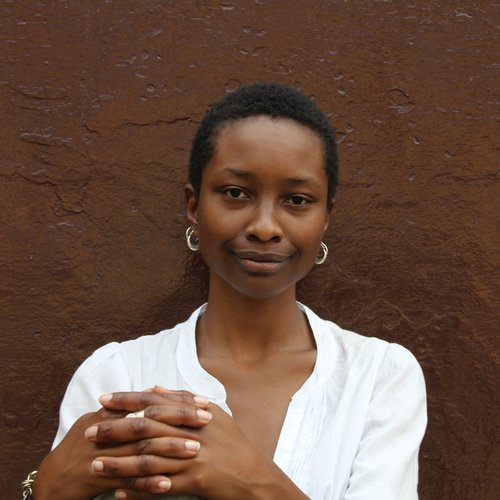
The purpose of the African Women in Cinema Blog is to provide a space to discuss diverse topics relating to African women in cinema--filmmakers, actors, producers, and all film professionals. The blog is a public forum of the Centre for the Study and Research of African Women in Cinema.

Le Blog sur les femmes africaines dans le cinéma est un espace pour l'échange d'informations concernant les réalisatrices, comédiennes, productrices, critiques et toutes professionnelles dans ce domaine. Ceci sert de forum public du Centre pour l'étude et la recherche des femmes africaines dans le cinémas.

ABOUT THE BLOGGER

My photo
Director/Directrice, Centre for the Study and Research of African Women in Cinema | Centre pour l'étude et la recherche des femmes africaines dans le cinéma

Translate

Search This Blog

Showing posts with label Hawa Essuman. Show all posts

17 September 2019

Women at the | Frauen beim | Les Femmes au : Afrika Film Festival Köln - 19. -29 September 2019

Women at the | Frauen beim | Les Femmes au Afrika Film Festival Köln
19. -29 September 2019

Fokus:
Fundamentalismus & Migration
Fundamentalism and Migration
Fundamentalisme et Migration

Hawa Essuman (Kenya), 2019 Festival patron:
There’s a rediscovery of heritage on the continent and with that comes a shift in the relationship with Africa and Europe although not in a way that either side considered. Navigating this new space is delicate. A lot of thought is being given to what this looks like and what the ramifications are when put in the perspective of the shared histories that were never balanced. Is it now, despite the verbal will?

Fatima Sissani (Tunisia) : Cinema that reflects political history
Gastbeitrag | Guest Contribution | Contribution d’invitée 

Fibby Kioria (Uganda/Kenya)
Short film selection and discussion


FILM SELECTION

Dhalinyaro, 2018, 85 min.

Oufsaiyed Elkhortoum (Khartoum Offside), 2019, 75 min.

Sofia, 2018, 86 min,

Fig Tree, 2018, 93 min.

Freedom Fields, 2018, 99 min.

Entre eu e Deus (Between God and I), 2018, 60 min.

Les pastèques du Cheikh, 2018, 23 min.

AFRICAN SHORTS

Brotherhood, 2018, 25 min.

Family in Exile, 2018, 15 min.

Un air de kora, 2018, 23 min.

Black Mamba, 2017, 20 min.

12 September 2019

Afrika Film Festival Köln - 19 - 29 September 2019 - Fokus: Fundamentalismus & Migration

Afrika Film Festival Köln - 19 - 29 September 2019

PRESS RELEASE

PROGRAMMHEFT | BOOKLET | BROCHURE :

Theme: Fundamentalism and Migration
Hawa Essuman, 2019 Festival patron:
 "There’s a rediscovery of heritage on the continent and with that comes a shift in the relationship with Africa and Europe although not in a way that either side considered. Navigating this new space is delicate. A lot of thought is being given to what this looks like and what the ramifications are when put in the perspective of the shared histories that were never balanced. Is it now, despite the verbal will?"

The 17th Afrika Film Festival Köln: 75 films and 30 guests from 23 African countries and the diaspora. Ouagadougou, Tunis, Durban, Zanzibar, Tarifa, Rotterdam and Berlin – those are the international festivals that FilmInitiativ employees attended to compile the selection of films for Cologne. Along the way they discovered new masterpieces by old friends, and invited a number of young up-and-coming filmmakers to Cologne. Then there was all the online research done all over the world and the countless films that were personally submitted to FilmInitiativ by African directors. From this huge pool of material they watched hundreds of films, and 75 features, documentaries and shorts from 23 African countries, Brazil, the US and Europe made the final selection. The programme not only gives a geographical overview of where films are currently being made across Africa, but also the kind of subject matter being tackled in Africa and the diaspora. Engaged independent filmmakers and writers continue to shape the African cinematic landscape with ambitious films that uncover hidden (hi)stories, rail against social grievances, reflect urban life and document exciting artistic activity. What’s striking is how imaginative, brave and radical filmmakers in Africa are when it comes to addressing fundamentalist movements of all shades.


15 February 2019

FESPACO 2019: Silas de/by Hawa Essuman (Kenya)


FESPACO 2019
Silas (2017) 80min
de/by Hawa Essuman (Kenya) 

Official Selection | Sélection officielle
Documentary (feature)
Documentaire (long-métrage)


Synopsis

Liberian activist, Silas Siakor is a tireless crusader, fighting to crush corruption and environmental destruction in the country he loves.
Through the focus on one country, Silas is a global tale that warns of the power of politics and celebrates the power of individuals to fight back. One man's battle gains momentum and emboldens communities to raise their fists and smartphones, seize control of their lands and protect their environment. It is a new generation of resistance.
Activiste libérien Silas Siakor est un militant infatigable qui se bat pour écraser la corruption et la destruction de l'environnement dans le pays qu'il aime.
En visant sur son pays, Silas est un conte mondial qui met en garde contre le pouvoir de la politique et au même temps célèbre le pouvoir des individus à se défendre. La bataille d'un homme prend de l'ampleur et encourage les communautés à lever le poing et les smartphones, à prendre le contrôle de leurs terres et à protéger leur environnement. C'est une nouvelle génération de résistance.


Biography | Biographe


Ghanaian-Kenyan filmmaker Hawa Essuman's foray into the moving image started as a trainee director for the television series Makutano Junction, by the second season she was the assistant director. She quickly gained the confidence and experience to venture into film and in 2009 completed Lift and Selfish.  Hawa directed Soul Boy under the tutelage of German director Tom Tykwer who initiated the film workshop from which the film evolved. Silas, co-directed with Anjali Neyar has won multiple awards, including the Amnesty International Durban Human Rights Award (2018) and the Audience Award for best documentary at the Riverrun Film Festival (2018).

Hawa Essuman a travaillé pendant 15 ans comme scénariste pour le théâtre et la télévision sur des projets divers (publicités, séries documentaire). Son long métrage, Soul Boy, a été présenté dans plus de 40 festivals de cinéma à travers le monde, remportant plusieurs prix, notamment le prix Dioraphte du public au Festival international du film de Rotterdam. Son film a été présenté en première à la Tate Modern en 2012 dans le cadre du projet Little Sun d’Olafur Eliasson. Silas, co-réalisé avec Anjali Neyar, a remporté de nombreux prix, notamment le Prix Amnesty International Durban des droits de l'homme (2018) et le Prix du public du meilleur documentaire au Festival du film de Riverrun (2018).


Hawa Essuman reflects on her source of inspiration and how film contributes to making the world a better place.

Humans [are my biggest source of inspiration]. I love human interaction and human relationships and how we absorb stories, conversations. How we look to better ourselves. I really enjoy that and how we question ourselves. I like the questioning and the curiosity of the human mind...

Film shows us who we are at that time and we are constantly changing and constantly moving forward. The film that I make today will inform us as to who we were then. It is a 3D snapshot of who it is we were at that time. And the film that's made after that will show us who we are then. That is what it is for. It is very informative. It's like any other piece of art in that respect. That you get to play over and over...

(Transcription of excerpts of the interview by Neta Norrmo of Aveny Production https://www.youtube.com/watch?v=wUtYX8pZ_so)


Hawa Essuman relate sa source d'inspiration et explique comment le cinéma contribue à rendre le monde meilleur.

Les être humains [sont mes plus grandes sources d’inspiration]. J'aime les interactions et les relations humaines et la manière dont nous absorbons les histoires, les conversations. Comment nous cherchons à nous améliorer. J'aime vraiment ça et la façon dont nous nous posons des questions. J'aime le questionnement et la curiosité de l'esprit humain ...

Les films nous montrent qui nous sommes à ce moment-là et nous évoluons, progressons constamment. Le film que je fais aujourd'hui nous dira qui nous étions à l'époque. C'est un instant en 3D de qui nous étions à cette époque. Et le film qui sera fait après nous montrera qui nous étions à cet instant-là. Il est fait pour ça. C'est très instructif. C'est comme n'importe quelle autre œuvre d'art à cet égard, qu’on peut jouer encore et encore ...

(Transcription d'extraits de l'entretien avec Hawa Essuman par Neta Norrmo de Aveny Production)


28 September 2018

Laureates of the Afrika Film Festival Köln 2018 Audience Award: Hawa Essuman and Machérie Ekwa Bahango

Laureates of the Afrika Film Festival Köln 2018 Audience Award: Hawa Essuman and Machérie Ekwa Bahango

Congratulations to the laureates of the Afrika Film Festival Köln 2018 Audience Award: Hawa Essuman for the best documentary and Machérie Ekwa Bahango for the best feature film.

Hawa Essuman, Anjali Nayar (Canada/South Africa/ Kenya), Silas, 2017
Liberian activist, Silas Siakor is a tireless crusader, fighting to crush corruption and environmental destruction in the country he loves.

Through the focus on one country, Silas is a global tale that warns of the power of politics and celebrates the power of individuals to fight back. One man's battle gains momentum and emboldens communities to raise their fists and smartphones, seize control of their lands and protect their environment. It is a new generation of resistance.

Machérie Ekwa Bahango, (DR Kongo), Maki’la, 2018
Maki observes the sapeurs with a mixture of amusement and scorn. They’re all the family she has, this group of young men who use the streets of Kinshasa as their stage, showing off their wild mix of street chic and stolen designer fashions. Maki has been on the streets a long time and is married to Mbingazor, the gang’s boss. But at some point, the 19-year-old has had enough of this gang of boys, who are too busy getting high and drunk to do anything with themselves. Survival must be secured. The next time money for food runs out, Maki crosses paths with the much younger Acha. This newcomer is a fresh arrival in Kinshasa, and doesn’t yet know the rules. Spurred on by Acha’s beginner’s luck as a thief, the pair set off on an adventure together, which soon arouses Mbingazor’s jealousy.

13 September 2018

Women at the | Frauen beim | Les Femmes au : Afrika Film Festival Köln - 13. - 23. September 2018


WOMEN AT THE | FRAUEN BEIM | LES FEMMES AU :
13. - 23. September 2018 

Fokus:

Innerafrikanische Migration
Theme: Migrations in Africa
Thème : Migrations en Afrique

Josza Anjembe
Machérie Ekwa Bahango
Khadidiatou Sow
Hawa Essuman
Safi Faye
Selly Raby Kane
Ng’endo Mukii
Marie Laurentine Bayala
Apolline Traoré

Gastbeitrag | Guest Contribution | Contribution d’invitée 
Fatima Sissani : Der Blick von Innen | The inside view | Le regarde la dedans


Josza Anjembe (France-Cameroon) Le bleu blanc rouge de mes cheveux, 2016

English
Seyna, a seventeen-year-old Cameroonian adolescent, is passionate about the history of France, the country where she was born and which she loves very much. Having obtained her baccalaureate and approaching adulthood, Seyna has only one desire, to acquire French nationality. But her father Amidou is fiercely opposed to it.

Français
À dix-sept ans, Seyna, une adolescente camerounaise se passionne pour l'histoire de la France, le pays qui l'a vue naître et dont elle est profondément amoureuse. Son baccalauréat en poche et sa majorité approchant, Seyna n'aspire qu'à une chose : acquérir la nationalité française. Mais son père Amidou s'y oppose farouchement.

Machérie Ekwa Bahango, (DR Kongo), Maki’la, 2018

English
Maki observes the sapeurs with a mixture of amusement and scorn. They’re all the family she has, this group of young men who use the streets of Kinshasa as their stage, showing off their wild mix of street chic and stolen designer fashions. Maki has been on the streets a long time and is married to Mbingazor, the gang’s boss. But at some point, the 19-year-old has had enough of this gang of boys, who are too busy getting high and drunk to do anything with themselves. Survival must be secured. The next time money for food runs out, Maki crosses paths with the much younger Acha. This newcomer is a fresh arrival in Kinshasa, and doesn’t yet know the rules. Spurred on by Acha’s beginner’s luck as a thief, the pair set off on an adventure together, which soon arouses Mbingazor’s jealousy.

This debut packs in a whole lot: The drama of the story, the raw opulence of the setting and street cred of the actors are all striking cinematic statements. Machérie Ekwa Bahango is part of a group of young filmmakers in Kinshasa working to revitalise Congolese cinema and create works that equally appeal to their own home audiences.

Français
Makila est une jeune fille de 19 ans qui vit dans la rue depuis l'âge de 13 ans. A son arrivée, elle a été accueillie par le caïd Mbingazor, un délinquant albinos, qui l'a initiée à la façon de vivre, ou plutôt de survivre, dans la rue : drogue, prostitution, vol… Les deux finissent par se marier. Devenue femme de caïd, Makila engage à son service des enfants qui volent pour elle, en échange d'une protection et de quelques miettes. Elle arrête ainsi de se prostituer. Makila et Mbingazor forment le couple le plus respecté de la rue, mais très vite, leur relation basée sur l'exploitation et la violence, commence à ennuyer la jeune fille qui se sent prisonnière. Elle décide de quitter Mbingazor…


Khadidiatou Sow, (Senegal) Une Place dans l‘Avion, 2017

English
A radio station announces that a special aircraft to the US is at the disposal of any traveller wishing to emigrate, on demand. But there is a limited number of places. Moussa, who has always dreamt of leaving, decides to set off.

Français
Une station de radio annonce qu'un avion spécial à destination des États-Unis vient d'être mis à la disposition de tout voyageur désireux d'émigrer, sans aucune formalité ou contrainte. Sauf que les places sont limitées. Moussa qui a toujours rêvé de partir se découvre des capacités insoupçonnés.

Hawa Essuman, Anjali Nayar (Canada/South Africa/Kenya), Silas, 2017

English
Liberian activist, Silas Siakor is a tireless crusader, fighting to crush corruption and environmental destruction in the country he loves.

Through the focus on one country, Silas is a global tale that warns of the power of politics and celebrates the power of individuals to fight back. One man's battle gains momentum and emboldens communities to raise their fists and smartphones, seize control of their lands and protect their environment. It is a new generation of resistance.

Français
Activiste libérien Silas Siakor est un militant infatigable qui se bat pour écraser la corruption et la destruction de l'environnement dans le pays qu'il aime.

En visant sur son pays, Silas est un conte mondial qui met en garde contre le pouvoir de la politique et au même temps célèbre le pouvoir des individus à se défendre. La bataille d'un homme prend de l'ampleur et encourage les communautés à lever le poing et les smartphones, à prendre le contrôle de leurs terres et à protéger leur environnement. C'est une nouvelle génération de résistance.

Safi Faye (Senegal), Kaddu Beykat (Letter From My Village) 1975

English
Ngor and Coumba live in a small village of farmers-breeders in Senegal live. They have wanted to get marry for the past two years. And again this year, the harvest is bad ... The rains are insufficient, irregular. Groundnut, a colonial-era crop, the only marketable produce, is harvested only once a year.

Français
Dans un petit village d'agriculteurs-éleveurs au Sénégal habitent Ngor et Coumba. Il y a maintenant deux ans que Ngor désire épouser Coumba. Et cette année encore, la récolte est mauvaise... Les pluies sont insuffisantes, irrégulières. Or l'arachide, culture coloniale, la seule commercialisable, ne se récolte qu'une fois par an.

Selly Raby Kane (Senegal) The Other Dakar, 2017

English
In this dreamlike 360º film, we follow a girl in her journey through “The other Dakar”, a place where artists hold the secret wonders of the city.

Français
Une petite fille est choisie et reçoit un message pour découvrir le visage caché de Dakar. Un hommage 360º à la mythologie sénégalaise. Embarquez dans l’univers fantastique et foisonnant de l’artiste, et découvrez la face cachée de la capitale sénégalaise.

Ng’endo Mukii (Kenya) Nairobi Berries, 2017

English
In the empty spaces we cannot claim as our own, in forests full of smoke and beneath waters dappled with bougainvillea, two women and a man wrangle. Each must hollow out the other’s core for fruits promised but only ever borne, in dreams. For this is Nairobi, the place we call home.

Français
Dans les espaces vides que nous ne pouvons revendiquer comme les nôtres, dans des forêts pleines de fumée et sous les eaux pointées de bougainvilliers, deux femmes et un homme se disputent. Chacun doit creuser le noyau de l’autre pour obtenir des fruits promis mais qui n’été octroyé que dans les rêves. Car c'est Nairobi, l'endroit que nous appelons chez nous.

Marie Laurentine Bayala, (Burkina Faso), Fantôme du Père, 2018

English
In this documentary, the director follows the path of mixed-race Franco-Burkinabe, Claire Lagedemond in her journey of identity to find her father, whom she has not seen since childhood. Born in Côte d’Ivoire, she grew up in the village. In Burkina, with her non-literate grandmother, she is now more than 40 years old and determined to find the father who for her has become a ghost. Also, Claire fights to prevent this same situation from happening to her son whose father is also absent. In this film, one has the impression of being transported into an investigation that goes from Ouagadougou to Abidjan, of which we absolutely want to know the outcome. (To the ghost of the father by Marie Laurentine Bayala. By Bengnime Rachelle Some. Source: JCFA NEWS No. 3 Journées Cinématographiques de la Femme Africain de l'Image).

Français
La réalisatrice suit dans ce documentaire les traces de Claire Lagedemond, métisse franco- burkinabè, dans sa quête identitaire pour retrouver son père qu’elle n’a plus revu depuis son enfance. Née en Côte d’Ivoire, elle a grandi au village. Au Burkina, auprès de sa grand-mère illettrée, âgée aujourd’hui de plus de 40 ans. Elle est obstinée à retrouver ce père devenu un fantôme pour elle. Aussi, Claire se bat pour éviter que cette même situation n’arrive pas à son fils dont le père est absent. Dans ce film, on a l'impression d'être emporté par une enquête qui va de Ouagadougou à Abidjan, dont on tient absolument à connaître le dénouement. (Au fantôme du père de Marie Laurentine Bayala. Par Bengnime Rachelle Some. Source: JCFA NEWS No. 3 Journées Cinématographiques de la Femme Africain de l'Image). 

Apolline Traoré (Burkina Faso), Frontières (Borders) 2017

English
As the road movie is a cinematic genre that puts the voyage at the heart of its adventures, by its title ("Frontiers") Apolline Traoré's third feature is framed from the start as a fantastical journey of the problematic passage from one country to another.

[Français]
Le road movie est un genre cinématographique qui met le voyage au cœur de ses péripéties. Par son titre ("Frontières") le troisième long métrage d'Apolline Traoré se pose d'emblée comme un parcours rocambolesque au cours duquel le passage d'un pays à un autre pose problème.

02 March 2012

Women prominently featured at the First Luxor African Film Festival 2012

Women prominently featured at the
First Luxor African Film Festival 2012

The pan-African vision of the first Luxor African Film Festival was omnipresent. Culturally separated from the continent for decades, Egypt’s desire to reunite with Africa was expressed throughout the festival.

Equally visible at the Festival were women in every aspect. On the organisational level, executive director Azza El Hosseiny provided exquisite leadership. Her hope is that the festival will play an important role in making the change that the revolution evoked. Also present in all corners of Luxor was the gaze of the beautifully brown woman featured on the Festival poster.

Thirty countries were represented, and of the forty-one films in competition, eleven were by women. Of the nine films out of competition, one film was woman-directed, The Agenda and I by Neveen Shalabi of Egypt. In the Afro-Cinema Pathway category, three of the fifteen films were made by women, featuring classics such as Senegalese Safi Faye’s 1975 film Peasant Letter, The Night of Truth (2004), the award-winning film by Burkinabè Fanta Nacro, who was also a jury member of the short films selection, and Ugandan Caroline Kamya’s highly-acclaimed Imani (2009), which had its world premiere at the Berlin International Film Festival in 2010. 

Spanning the continent, the films represented every region with a broad spectrum of themes. The selection of films by women, the majority of whom attended, included: 

Long films in competition

Taghreed Elsanhouri  (Sudan) Our Beloved Sudan
Hawa Essuman (Kenya) Soul Boy
Nada Mezni Hafaiedh (Tunisia) Tunisian Stories

Short films in competition

Yaba Badoe  (Ghana) The Witches of Gambaga
Tsitsi Dangarembga (Zimbabwe) Nyami Nyami and the Evil Eggs
Mona Iraki (Egypt) Somalia, the Land of the Evil Spirits
Rina Jooste (South Africa) Captor and Captive
Wanuri Kahiu (Kenya) Pumzi
Annette Kouamba Matondo (Congo-Brazzaville) We don't forget, we forgive
Zipporah Nyaruri (Uganda-Kenya) Zebu and the Photo Fish
Rungano Nyoni (Zambia) Mwanza the great

Other highlights of the festival were the “Main Seminar: Sub-Saharan Cinema” which featured a discussion by Beti Ellerson on African women in cinema, and at the opening and closing of the festival a presentation of students and their work--women students were also well represented.

The Festival closed with a delightful surprise as the two top awards went to women. The Greater Nile Award for Best Film: the Golden Mask of Tutankhamen was awarded to Ghanaian-Kenyan Hawa Essuman for her film Soul Boy and The Special Jury Award: the Silver Mask of Tutankhamen to Taghreed Elsanhouri of Sudan for her film Our Beloved Sudan.

Taghreed Elsanhouri and Hawa Essuman expressed delight in this high honour:

Taghreed Elsanhouri: I am really happy because Egypt is like a second home. I do think that it is a sign that we in North Africa are beginning to recognise our Africanness. We are at the forefront of a paradigm shift.

Hawa Essuman: I feel very humbled and it fortifies my resolve to continue with my work. The festival was very inclusive from the beginning, and was interested in fusing the north-south-west-east divide that plagues our cinema. I hope it will succeed in changing that.


Report by Beti Ellerson


EN FRANÇAIS

28 August 2010

Hawa Essuman and the Soul Boy Project

Soul Boy, written by Kenyan author Billy Kahora, evolved from a film workshop initiated by the German association One Fine Day with filmmaker Tom Tykwer. Shortly into the film production, Ghanaian-Kenyan Hawa Essuman undertook directorship with Tykwer as her mentor. The film Soul Boy is the result of this mentorship and collaboration.

Following are three two clips: the Soul Boy trailer, a discussion with Hawa Essuman and Tom Tykwer, and an interview with Hawa Essuman at the Göteborg International Film Festival, 2010.


SYNOPSIS

Nairobi, Kenya. 14 year-old Abila lives with his parents in Kibera, one of the largest slums in East Africa. One morning the teenager discovers his father ill and delirious. Someone has stolen his soul, mumbles the father as he sits huddled in a corner. Abila is shocked and confused but wants to help his father and goes in search of a suitable cure.Supported by his friend Shiku who is the same age as him, he learns that his father has gambled his soul away in the company of a spiritual woman.


The teenager doesn’t want to believe it and sets about looking for the witch. When he finally discovers her in the darkest corner of the ghetto, she gives him seven challenging tasks to save his father’s lost soul. Abila embarks on an adventurous journey which leads him right through the microcosm of his home town.


Soul Boy (2009) by Hawa Essuman


KIBERA

SOUL BOY is set in Kibera, one of the largest slums in the African continent, in the middle of Nairobi, Kenya. Kibera is a chaotic slum-city built out of temporary housing and is infamous for its high level of squalor. Children have to grow up quickly here as they learn to fend for themselves. Suspicion and fear still lingers as the Luo and Kikuyu communities recover from the 2007/2008 post election violence which saw neighbour turn on neighbour. Despite all of this the cohesion and the dignity of the people who live here is remarkable. Alongside the day to day tension, the social environment is dominated by a universal solidarity and common desire to maintain a working community.

Hawa Essuman and Tom Tykwer during
the Göteborg International Film Festival 2010

THE PROJECT

In September 2008 Marie Steinmann and Tom Tykwer teamed up with Ginger and Guy Wilson (from the Nairobi based production company Ginger Ink) to set up a project which would build on the work of their One Fine Day association and the British NGO partnership Anno’s Africa – both of which have specialised in developing creative opportunities for those working in developing countries.

Operating within the framework of a manageable budget, the project was intended to develop a film workshop in Nairobi. Led by Tom Tykwer, a small team of professional filmmakers would create a feature film in Kibera by working together with a much larger crew of young local apprentices. The first goal was to integrate Nairobi’s residents, especially the slum inhabitants, those who were curious and wanted to learn the practical skills offeature film making, so that they could learn technical skills which would create job prospects and leave inspiration in the communities.

The project quickly developed its own dynamic energy. The Kenyan author Billy Kahora outlined the idea for a film, which translated the secrets and myths of this multilayered social microcosm into a modern, inspiring fairytale-like story: Soul Boy. The young Ghanaian-Kenyan filmmaker Hawa Essuman (born in 1980) took over the directing reigns. Soul Boy is her film debut, having worked successfully in local theatre. In the meantime she is developing her second feature film, which is set on the coast of Kenya. Following an intensive period of research in Kibera the screenplay took approximately six weeks to complete. Casting the film was spread out across the whole city: with the support of Anno’s Africa, the production searched for their young lead actors in Kibera’s slums, schools and alleyways. One week of pre-production was all that remained to prepare for the 13-day shoot. Soul Boy was finally shot between 17 November and 1 December 2008.


Hawa Essuman

Ghanaian-Kenyan filmmaker Hawa Essuman's foray into the moving image started as a trainee director for the television series Makutano Junction, by the second season she was the assistant director. She quickly gained the confidence and experience to venture into film and in 2009 completed Lift and Selfish.  Hawa directed Soul Boy under the tutelage of German director Tom Tykwer who initiated the film workshop from which the film evolved. 

During an interview at the Göteborg International Film Festival's world premiere of Soul Boy, she reflected on her source of inspiration and how film contributes to making the world a better place.

Below is a transcription of excerpts of the interview by Neta Norrmo of Aveny Production.

Humans [are my biggest source of inspiration]. I love human interaction and human relationships and how we absorb stories, conversations. How we look to better ourselves. I really enjoy that and how we question ourselves. I like the questioning and the curiosity of the human mind...

Film shows us who we are at that time and we are constantly changing and constantly moving forward. The film that I make today will inform us as to who we were then. It is a 3D snapshot of who it is we were at that time. And the film that's made after that will show us who we are then. That is what it is for. It is very informative. It's like any other piece of art in that respect. That you get to play over and over...
I've always been a fan of magical realism stories so to have the opportunity to direct a film that was set in that context was very exciting for me...


Soul Boy (2009) by Hawa Essuman


Links


Blog Archive