The purpose of the African Women in Cinema Blog is to provide a space to discuss diverse topics relating to African women in cinema--filmmakers, actors, producers, and all film professionals. The blog is a public forum of the Centre for the Study and Research of African Women in Cinema.

Le Blog sur les femmes africaines dans le cinéma est un espace pour l'échange d'informations concernant les réalisatrices, comédiennes, productrices, critiques et toutes professionnelles dans ce domaine. Ceci sert de forum public du Centre pour l'étude et la recherche des femmes africaines dans le cinémas.

ABOUT THE BLOGGER

My photo
Director/Directrice, Centre for the Study and Research of African Women in Cinema | Centre pour l'étude et la recherche des femmes africaines dans le cinéma

Translate

Search This Blog

Showing posts with label Musola Cathrine Kaseketi. Show all posts

03 December 2025

3 December, International Day of Persons with Disabilities: A tribute to Zambian filmmaker Musola Cathrine Kaseketi


3 December, International Day of Persons with Disabilities: A tribute to Zambian filmmaker Musola Cathrine Kaseketi

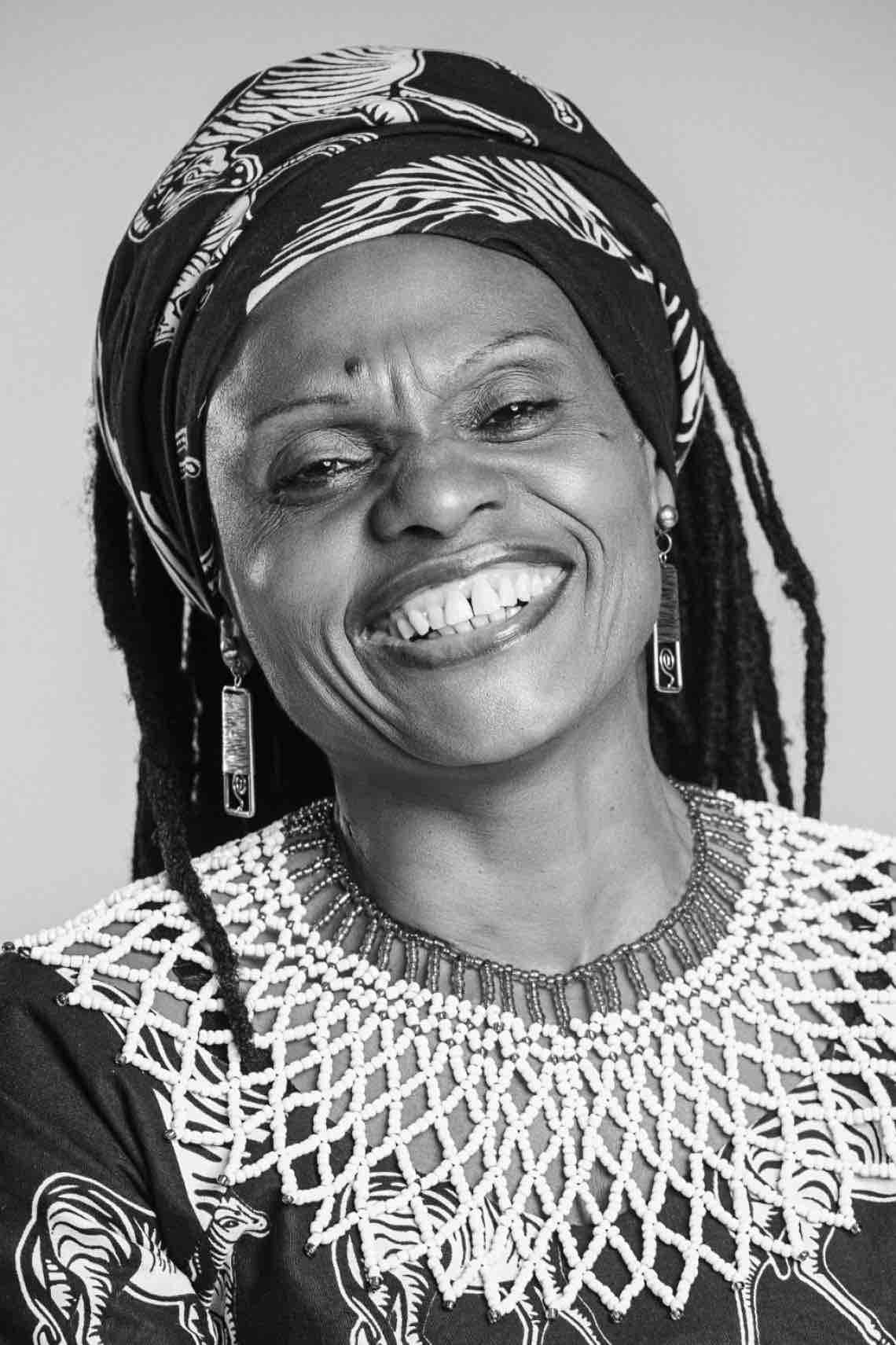
Musola Cathrine Kaseketi declares: “You can make a difference”, and she certainly has, by showing that women with disabilities are not different than anyone else; given the chance to learn, excel and succeed. Musola Cathrine Kaseketi founded Shungu Namutitima International Film Festival of Zambia (SHUNAFFoZ) with this objective in mind: to showcase through cinema, the capabilities of people and women in particular, with disabilities.


I grew up as a healthy and happy child. I was left with a permanent disability at the age of five from an injection in the nerve of my left leg; nonetheless, my family treated me as a normal child.

I also lived with my stepmother who taught me to be independent and a fighter. Because of the caring way that people in my surroundings responded to me, I had no idea that there was discrimination towards persons with disabilities.

It was in high school that I started to realised that I was not always accepted in society and therefore, not able to do certain things. Often my feelings were hurt after the many instances when the school authorities isolated students with disabilities from the enabled so that they could not get to know each other. My disability became a motivation to work harder and use art as a tool to communicate. 

I met a man without hands who led a normal life and could even eat using a fork and knife. This encounter motivated me very much and inspired me to write a story about self-determination in 1989. It was very successful and was a catalyst for the change in attitudes towards disabilities in Zambia. 

I continued to use dramatic poetry, writing and stage acting as a tool to foster the spirit of self-confidence and self-help, and to impart self-acceptance, self-determination and independent living.

In 2018, Musola Cathrine Kaseketi received the Her Abilities Award, the first global award honoring the achievements of women with disabilities: “Look at your obstacles as your motivations to achieve your goals. Ignore all the negative intimidating voices. Embrace the positive, empowering words because you are just like any other woman.”

Photo: Musola Cathrine Kaseketi receiving an award.

01 December 2025

The African Women in Cinema Blog commemorates United Nations World AIDS Day


As highlighted in past commemoration posts, African women in cinema often use the visual media as a tool for awareness building as it relates to matters that touch their societies and burning issues that effect Africa.

In this regard the initiative Scenarios from Africa had as objective to give young people a unique occasion to learn more about HIV/AIDS. The 2011 edition demonstrated the extent that African girls and young adults seized this opportunity to tell these stories. Among the 25 frontrunners 17 were girls/young women--the youngest 12 years old. Furthermore, among the awardees of the three grand prizes two were young women.

Burkinabé Fanta Nacro has played an important role in the above initiative, as prominent African cineastes adapted films using these scenarios: A Call to Action, A Love Story, A Ring on Her Finger, The Champion, Iron Will, Peace of Mind, Never Alone, The Reasons for a Smile, Tiger Tigress. Also from the Series, Cameroonian Kidi Bebey’s Looking for a Brave Man explored relationships in the age of AIDS. A young woman seeking a serious relationship demands that her partner act responsibly which entails taking the AIDS test.

Fanta Nacro’s filmography also includes the 1998 short film, Le Truc de Konate (Konate's Thing). The comedy employed as a means of consciousness-raising proved very popular with the Burkinabé public, intermingling an established distrust of new concepts and old-fashioned masculine virility and honour with female consciousness.

With a more solemn tone, Tsitsi Dangarembga of Zimbabwe relays the tragic costs of AIDS in Everyone's Child, directed in 1995. The film focuses on the devastating consequences for the children who are left to fend for themselves after the AIDS-related death of parents. On a joyful note, in Zambian Musola Kaseketi's film Suwi, the young Bupe finds a happy home, while Tanzanian Beatrix Mugishagwe’s Tumaini tells a story of hope.

Kenyan Wajuhi Kamau, of the Film Production Department of the Educational Media Service of the Minister of Education, emphasises the effectiveness of video as a means of educating people about a range of issues, from AIDS to family planning. Using both the documentary and drama presentations, the objective of the agency is to allow people to see themselves reflected in the images. "When you see yourself, you see your situation, then it is easy to remember and change attitudes and behaviour." Zimbabwean Prudence Uriri has also focused on issues related to AIDS and health in general. The Unesco-commissioned Madizela and Samora (2003), and Life (2002) produced by Rooftop Promotions, are two AIDS-focused films directed by Uriri. She sees her role as a filmmaker to open a dialogue regarding the problems that people face, and in so doing they may be better informed.

02 July 2025

The African Women in Cinema Blog celebrates Disabilities Pride Month featuring Musola Cathrine Kaseketi

The African Women in Cinema Blog celebrates Disabilities Pride Month featuring Musola Cathrine Kaseketi

Musola Cathrine Kaseketi declares: “You can make a difference”, and she certainly has, by showing that women with disabilities are not different than anyone else; given the chance to learn, excel and succeed. Musola Cathrine Kaseketi founded Shungu Namutitima International Film Festival of Zambia (SHUNAFFoZ) with this objective in mind: to showcase through cinema, the capabilities of people and women in particular, with disabilities.


I grew up as a healthy and happy child. I was left with a permanent disability at the age of five from an injection in the nerve of my left leg; nonetheless, my family treated me as a normal child.

I also lived with my stepmother who taught me to be independent and a fighter. Because of the caring way that people in my surroundings responded to me, I had no idea that there was discrimination towards persons with disabilities.

It was in high school that I started to realised that I was not always accepted in society and therefore, not able to do certain things. Often my feelings were hurt after the many instances when the school authorities isolated students with disabilities from the enabled so that they could not get to know each other. My disability became a motivation to work harder and use art as a tool to communicate. 

I met a man without hands who led a normal life and could even eat using a fork and knife. This encounter motivated me very much and inspired me to write a story about self-determination in 1989. It was very successful and was a catalyst for the change in attitudes towards disabilities in Zambia. 

I continued to use dramatic poetry, writing and stage acting as a tool to foster the spirit of self-confidence and self-help, and to impart self-acceptance, self-determination and independent living.

In 2018, Musola Cathrine Kaseketi received the Her Abilities Award, the first global award honoring the achievements of women with disabilities: “Look at your obstacles as your motivations to achieve your goals. Ignore all the negative intimidating voices. Embrace the positive, empowering words because you are just like any other woman.”

Photo: Musola Cathrine Kaseketi receiving an award.

08 October 2021

Zambian Women in Cinema, Visual Media and Screen Culture

Zambian Women in Cinema, Visual Media and Screen Culture


"You can make a difference" Musola Cathrine Kaseketi

Musola Cathrine Kaseketi, the first Zambian woman filmmaker, is recognized for her work in raising consciousness through cinema regarding people with disabilities. Musola, who also has a disability, founded Shungu Namutitima International Film Festival of Zambia (SHUNAFFoZ) in order to showcase, the capabilities of people and women in particular, with disabilities. Wanting to share her skills with aspiring filmmakers she established Vilole Images Production in 2002 whose aim is "to provide a platform for skills and knowledge enhancement, development and promotion of the film and television industry through training workshops throughout the year and hosting of a film festival each year that will screen products with various themes that contribute towards social change and improve livelihoods."

Having attended the Newtown Film and Television School in Johannesburg, which incorporates the empowerment of black women in its mission, she in turn has been mentor to other women. Jessie Chisi who was trained by Musola acquired filmmaking experience while working on her film Suwi. In 2015 at the Women of the Year Awards--designed to honor some in various fields who have made a contribution in shaping Zambia--she received the Woman of the Year in Film. She had this to say about receiving the award: "I was honoured amongst many other great women including the Honourable Inonge Wina, the first female vice president of Zambia, and also with two of my mentors, Dr. Tukiya K. Mabula, Deputy Governor at the Bank of Zambia, and the woman who taught me filmmaking Musola Cathrine Kaseketi. How cool can that be? Being honoured together with the women who you look up to?" A decade before in 2007, Musola was recognized at the Harare-based International Images Film Festival for Women (IIFF), during which she received the Distinguished Woman of African Cinema Award at its inaugural reception. In 2013, Jessie Chisi founded the Zambia Short Film Fest to support emerging filmmakers. In 2022, she founded Zambian Women in Film to empower women's voices.

Like Jessie Chisi, women are aware of the important cultural exchange and support that the international experiences can provide. Because of the training and production opportunities outside of Zambia, women navigate in myriad locations, their home country always the point of departure. Seya Kitenge Fundafunda attended high school at the International School of Geneva, later enrolling in a film internship program in Helskinki, Finland. From these experiences she honed her filmmaking and organizing skills as director of a media company African Reel, whose mission is, to tell realistic African stories, to inspire, educate, motivate, challenge, as well as entertain the world in general and Africa in particular. Another project, Amka Arts Festival is a multi disciplinary arts festival whose main goal is to promote Zambian art and showcase its diverse culture. She had this to say about the empowerment of women: "Women are the major players in the development process and need to be empowered. Media is a powerful tool to educate women on issues that affect them, because what people see they believe and begin to practice." Rungano Nyoni, born in Zambia, emigrated to Wales at the age of nine. She directed several short films, and her first feature film, I am not a Witch, was selected at the Directors' Fortnight at Cannes.

Through the efforts of women in Zambia and the Diaspora, Musola Kaseketi's vision of her country continues to resonate: "Zambia is a nation filled with artists who have great potential in the area of acting and production."

These Zambian women are among the growing cohort of filmmakers and film activist who contribute to the vibrancy of a cinema culture in the country.

Report by Beti Ellerson

Links to articles on the African Women in Cinema Blog:

I Am Not A Witch by Rungano Nyoni (Zambia | Zambie)
https://africanwomenincinema.blogspot.com/2019/02/fespaco-2019-i-am-not-witch-je-ne-suis.html

Jessie Chisi: Woman of the Year in Film Award
https://africanwomenincinema.blogspot.com/2015/04/jessie-chisi-woman-of-year-in-film_15.html

Jessie Chisi talks about "Between Rings: The Esther Phiri Story" and her hopes for Zambian cinema
https://africanwomenincinema.blogspot.com/2014/09/jessie-chisi-talks-about-between-rings.html

I Am Every Woman: Call for Entry View Special Images Film Festival 2012 (Zambia)
https://africanwomenincinema.blogspot.com/2011/08/i-am-every-woman-call-for-entry-view.html

Rungano Nyoni: Mwansa the Great
https://africanwomenincinema.blogspot.com/2011/11/rungano-nyoni-mwansa-great.html

A Conversation with Sam Kessie
https://africanwomenincinema.blogspot.com/2011/05/conversation-with-sam-kessie.html

Musola Cathrine Kaseketi: You Can Make a Difference
https://africanwomenincinema.blogspot.com/2011/03/musola-cathrine-kaseketi-you-can-make.html

05 March 2011

Musola Cathrine Kaseketi: You Can Make a Difference

Musola Cathrine Kaseketi, founder of Vilole Images Productions, in 2005 launched the Shungu Namutitima International Film Festival of Zambia (SHUNAFFoZ), formerly known the International Film Festival of Zambia (IFFoZ). Musola who is differently-abled, also created a space to celebrate through the art of film, the abilities of all women, and particularly to integrate women with disabilities.

In 2018, received the Her Abilities Award, the first global award honoring the achievements of women with disabilities.

In an interview with Beti Ellerson, she talks about her passion, commitment, activism.

Musola, please talk a bit about yourself, your background.
Born in October 1968 the eighth of nine children, I grew up as a healthy and happy child. I was left with a permanent disability at the age of five from an injection in the nerve of my left leg; nonetheless, my family treated me as a normal child. I also lived with my stepmother who taught me to be independent and a fighter. Because of the caring way that people in my surroundings responded to me, I had no idea that there was discrimination towards persons with disabilities. In Sunday school I was involved in bible plays, the church choir and did poetry, and went on to primary school. It was in high school that I started to realised that I was not always accepted in society and therefore, not able to do certain things. Often my feelings were hurt after the many instances when the school authorities isolated students with disabilities from the enabled so that they could not get to know each other. My disability became a motivation to work harder and use art as a tool to communicate. I wrote poems, plays, stories and songs—though not making their message the main issue.

I first wrote Suwi as a stage play under the title “Rejection of Reality” after extensive research on disability. It was during that time that I met a man without hands who led a normal life and could even eat using a fork and knife. This encounter motivated me very much and inspired me to write a story about self-determination in 1989. It was very successful and was a catalyst for the change in attitudes towards disabilities in Zambia. In 1990 the production was shot as a teleplay and shown on the Zambia national television (ZNBC). The response was very good, though some viewed it as having a political subtext. From the latter response I came to realize the power of media. I continued to use dramatic poetry, writing and stage acting as a tool to foster the spirit of self-confidence and self-help, and to impart self-acceptance, self-determination and independent living.

Evolving from my role as actor, I had the privilege of attending the Newtown Film and Television School in Johannesburg, becoming the first Zambian woman filmmaker/director, and the first student there with a disability. While some of my fellow students and lecturers under-estimated my abilities to become a successful filmmaker, I graduated with honours including the award for Best Student of the Year 2000. Returning home to be a part of the development of the local industry in Zambia, I worked for Picture Perfect Production (PPP) in 2001 for a year and a half. There I accomplished many firsts, as a woman director of Zambia’s first soap opera, Kabanana. For a combination of reasons—being a woman and with a disability, I had to prove myself to some of the well-known actors who attempted to undermine me—within a few weeks skepticism changed to positive impressions among them and the press. Wanting to share my skills with aspiring filmmakers, in 2002 I established Vilole Images Production, where I have trained a number of young filmmakers.

Zambia is now developing a film culture and you have been part of that process. What is the state of cinema and filmmaking in Zambia?
Zambia is a nation filled with artists who have great potential in the area of acting and production. Unfortunately it lacks the institutions and financial means to develop these skills and because of this the documentary and drama productions are of poor quality, though there is a gradual improvement and with it an increasingly appreciative Zambian audience for local and African productions. The Zambian economy has declined significantly due to the weakening of its main industry, mining. Perhaps the development of a cinema industry may provide employment opportunities. Of course the government and the private sector must invest in this effort. On the other hand, the film industry is far from the point of reaching international standards, which is attributed to little or no experience in film production. There are only a handful of individuals who have experience, hence the need to train more filmmakers, including persons with disabilities, if the industry is going to improve.


Musola Cathrine Kaseketi talks about Suwi


Suwi is a film that deals with important issues related to physical challenges and adapting to the dramatic changes in one’s life. Suwi also has an autobiographical element. What have been your challenges and how have they influenced the Suwi story?
Initially I hesitated about dealing with disability issues as the subject of my first film because I did not want people to think that I was telling my own story. Unfortunately or fortunately it became literally impossible to raise money for what I thought would be my first feature, "Kamukola", since I did not have a show reel. In 2004 I decided to shoot Suwi, which at the time was called “Rejection of Reality”. I was not happy with the sound and camera work, so I decided to put the project on the shelf. What I appreciate most is that this experience helped me to mull over the script and rewrite it to reflect the life of anybody with or without a disability. I have had my own challenges as a woman, as a woman with a disability and as a woman filmmaker, and thus I consider every challenge as a motivation to forge ahead. Since I was not accepted in society because of my disability, but because my family helped me to accept and appreciate myself, I sometimes turn my experiences into humour and speak openly about my disability when I meet people for the first time. Some of these aspects are incorporated in Suwi. The character Suwi is very strong and refuses to sit at home and do nothing when she incurs this life-changing situation; this portrayal may encourage people to not give up. In one way this could reflect my childhood. I refused to accept people’s excuses for why they are this or that way. Despite my disability I walked about seven kilometres to school in a torn uniform and shoes. I had it hard at home and as a stepchild and was stigmatised in the community as a child with a disability, but I never gave up. And as a woman filmmaker with a disability from a country where the industry is still in its infancy, challenges continue, but I carry on with my life.

Today, so many people in our community are either infected with HIV/AIDS, or affected because someone has it. That is why I portrayed Suwi caring for a street kid who lost her parents to AIDS. I have seen and visited many women with disabilities who are looking after orphans or who are HIV positive themselves, nonetheless, society still believes a woman with a disability cannot have AIDS because she is not normal. And yet this woman breathes, smells, eats, loves and has feelings. So Suwi to some extent was influenced by some of my personal challenges.

How has Suwi been received? 

Suwi has been well appreciated, not only at home but also elsewhere, especially outside Africa. I am proud to say that it has attained many firsts as the Hon. MP Given Lubinda states to the Minister of Community Development Hon. Michael Kaingo: “The production is a first in many respects: the first Zambian woman director, first by a woman with a disability addressing a diversity of issues affecting women in the modern community, and first to be received so positively with awards internationally.” The film is an important contribution to Zambia’s budding film industry and a motivation to artists and women. So far it has had a positive influence on various people including some women with disabilities who have since left the streets as beggars and embarked on a path to reclaiming their dignity. It has also been used in medical institutions for students by the university teaching hospital in Zambia, for fundraising for the Cardiac Trust of Zambia, Habitat for Humanity Zambia, the Occupational Therapists Africa Congress in Malawi, and the Verona Film Festival will be using the film in schools and non-profit institution for the next three years.

What are some of the reflections of your audience regarding the film?
Sympathy, laughter, satisfaction, appreciation, upset with some characters.

Future projects?

I have three projects in the works. A 90 mn feature film “Kamukola” (Trapped), dealing with diverse themes: women’s rights to decision making, culture and tradition, freedom of choice, love, dishonesty and true friendship. As stated earlier, this was supposed to be my first feature. Now I am looking for funding and hope to start shooting early next year. I am working on a medical drama series, “The Doc, Sam Chileshe” set in a small village. It will address the clash between modernity and tradition in a health centre set in the rural area: challenges and beliefs in relations to AIDS, heart problems, witchcraft, love, among others. “Ndema Ikasa-Hold my hand” is a series of 26-minute short films on disability and accessibility.

Interview by Beti Ellerson (February 2011)


Suwi - Faith Beyond Limit (2009) by Musola Cathrine Kaseketi

Photo: Her Abilities

Blog Archive