The purpose of the African Women in Cinema Blog is to provide a space to discuss diverse topics relating to African women in cinema--filmmakers, actors, producers, and all film professionals. The blog is a public forum of the Centre for the Study and Research of African Women in Cinema.

Le Blog sur les femmes africaines dans le cinéma est un espace pour l'échange d'informations concernant les réalisatrices, comédiennes, productrices, critiques et toutes professionnelles dans ce domaine. Ceci sert de forum public du Centre pour l'étude et la recherche des femmes africaines dans le cinémas.

ABOUT THE BLOGGER

My photo
Director/Directrice, Centre for the Study and Research of African Women in Cinema | Centre pour l'étude et la recherche des femmes africaines dans le cinéma

Translate

Search This Blog

Showing posts with label Disabilities. Show all posts

03 December 2025

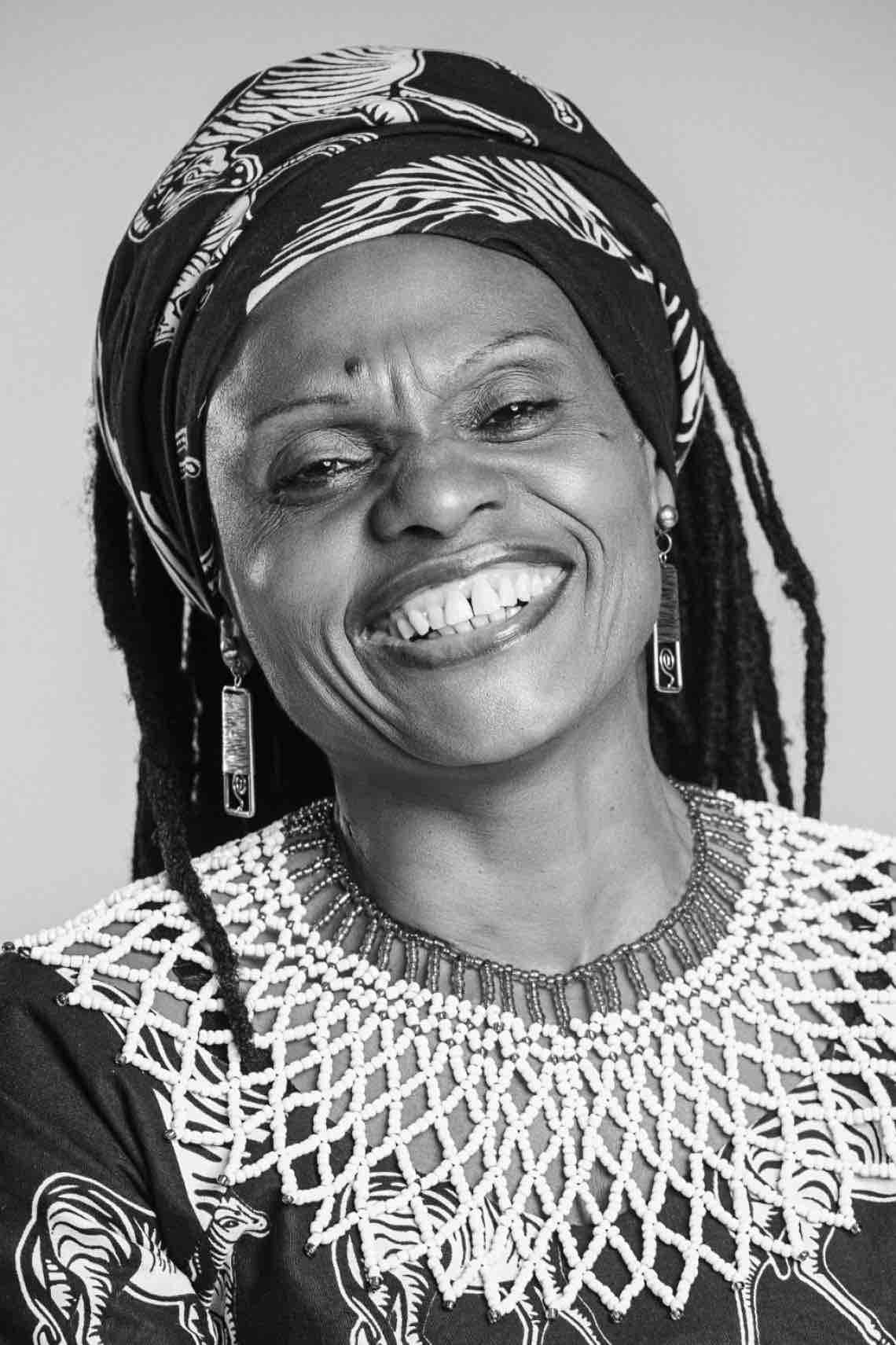
3 December, International Day of Persons with Disabilities: A tribute to Zambian filmmaker Musola Cathrine Kaseketi


3 December, International Day of Persons with Disabilities: A tribute to Zambian filmmaker Musola Cathrine Kaseketi

Musola Cathrine Kaseketi declares: “You can make a difference”, and she certainly has, by showing that women with disabilities are not different than anyone else; given the chance to learn, excel and succeed. Musola Cathrine Kaseketi founded Shungu Namutitima International Film Festival of Zambia (SHUNAFFoZ) with this objective in mind: to showcase through cinema, the capabilities of people and women in particular, with disabilities.


I grew up as a healthy and happy child. I was left with a permanent disability at the age of five from an injection in the nerve of my left leg; nonetheless, my family treated me as a normal child.

I also lived with my stepmother who taught me to be independent and a fighter. Because of the caring way that people in my surroundings responded to me, I had no idea that there was discrimination towards persons with disabilities.

It was in high school that I started to realised that I was not always accepted in society and therefore, not able to do certain things. Often my feelings were hurt after the many instances when the school authorities isolated students with disabilities from the enabled so that they could not get to know each other. My disability became a motivation to work harder and use art as a tool to communicate. 

I met a man without hands who led a normal life and could even eat using a fork and knife. This encounter motivated me very much and inspired me to write a story about self-determination in 1989. It was very successful and was a catalyst for the change in attitudes towards disabilities in Zambia. 

I continued to use dramatic poetry, writing and stage acting as a tool to foster the spirit of self-confidence and self-help, and to impart self-acceptance, self-determination and independent living.

In 2018, Musola Cathrine Kaseketi received the Her Abilities Award, the first global award honoring the achievements of women with disabilities: “Look at your obstacles as your motivations to achieve your goals. Ignore all the negative intimidating voices. Embrace the positive, empowering words because you are just like any other woman.”

Photo: Musola Cathrine Kaseketi receiving an award.

31 August 2011

I Am Every Woman: Call for Entry View Special Images Film Festival 2012 (Zambia)

CALL FOR ENTRY

VIEW SPECIAL IMAGES FILM FESTIVAL (VSIFF) 2012 
30th August 2011
Vilole Images Productions invites local and International filmmakers to submit documentaries, short films and full-length feature film to the View Special Images Film Festival. To be held from 02nd till 10th March 2012 in Livingstone the tourist capital of Zambia, the festival will run for 09 days with various activities that include screening of movies including in the communities, forums, workshops etc and conclude with a gala night.

A project of Vilole Images Productions, View Special Images Film Festival (VSIFF) was founded last year in November/December to integrating women with disabilities in celebrating the abilities of/for women and women with disabilities through the art of film. The timeframe for the festival is March around the international women’s day in Livingstone and the theme for the 2012 festival is:

‘I AM EVERY WOMAN’!
-I am Confident 
-I Listen and Speak up
-I embrace other women

Vilole Images Productions (VIP) is an Independent Production House that was legally registered in 2003 as a limited by grantee to pursue a focused vision of contributing to the development of the Zambian Film Industry with a long term vision of setting a film and television school. In 2006 VIP founded the International Film Festival of Zambia (IFFoZ) that was held in September along Peace Day in Lusaka. In the past the festival has seen international filmmakers come for the festival. However after the festival the guests desire to fly to Livingstone to see the Victoria Falls and other tourist sites. With such a background, VIP decided to move the film festival to Livingstone under the new name VSIFF, with a focus on appreciating and celebrating products for/by women and women with disabilities to promote integration of disability in the mainstream.  Vilole Images Production has chosen to embrace women with disabilities through the audio-visual images after noting how these women are left behind in most national and community development activities. 

Based in Livingstone, the VSIFF will be a unique and special festival that will continue to embraces Gender, HIV and AIDS, Disability, vulnerably kids/youths and Environment. Each year the festival will have a special theme, screen and award deserving films.
The aim of VSIFF is to provide a platform for skills and knowledge enhancement, development and promotion of the film and television industry through training workshops throughout the year and hosting of a film festival each year that will screen products with various themes that contribute towards social change and improve livelihoods. The intension is to use the festival to build new relationships to enable producers buy, sell and promote their products and exchange ideas/information on an international scale but in an African context. It is also an intention to promote the use of video/film as a tool to highlight issues on women and women with disabilities, promote Livingstone the tourist capital of Zambia, development and trade in film and television products in Africa, thus creating employment and contribute towards eradicating poverty in Zambia. The main emphasis is to mainstream Disability and Women in filmmaking, therefore, the festival is scheduled around the International Women’s day.

Being a tourist capital there will be an opportunities to visit the Victoria Fall, game parks, walks with lions and other beautiful Zambian tourist site alongside screenings, conferences and workshops. You just have to be there and see for yourself!

For Filmmakers, who have produced any films under the themes ‘I AM EVERY WOMAN-I am Confident, I Listen and Speak out and I embrace other women’ of any genre, (Documentaries, Short films, feature films) from all over the world are invited to submissions. Films should have all good production and entertainment values.

Submission of products should be DVD PAL only with the requested package. Uncompleted packages and late entries will not be accepted. Deadline for entry is 15th December, 2011. 

Competition
The Film may be entered for competition or out of competition. They should be produced within the last 10years.  Films submitted into the competition will be adjudicated by a jury/juries selected by the festival and the decision by the jury is final. The audience also has the privilege to award a feature film of their choice. Movies from all over the world are welcome to enter for screening, but only movies from Africa are legible to enter for competition. 

Please mark your package, ‘NCV-No Commercial Value-Film Festival Entry’, so we do not incur duties and taxes when the package is brought into Zambia.

For additional information feel free to contact the coordinator at 

View Special Images Film Festival OR
C/o Bantu Pathfinders Limited Room 309 Third floor, old wing
P O Box 61041 Mosi O Tunya House
Livingstone Livingstone
ZAMBIA ZAMBIA

Tel: +260 95 5 883 769/+260 96 8 492337/ +260 97 7 760827


VIEW SPECIAL IMAGES FILM FESTIVAL (VSIFF)
REGULATIONS 

General Programme information
The View Special Images Film Festival will take place from 02th – 10th March 2012. The Videos produced within the framework of the last 10 years and embrace social-economic motivation under the theme ‘I AM EVERY WOMAN-I am Confident, I Listen and Speak out, I embrace other women’  are eligible to enter the festival. 
1. General Video programme

Feature films, shorts and documentaries of any length, which satisfy the following conditions, are eligible.
Video’s can be shot on any format. (16mm, 35 mm, HDV, Beta and DVD)
Video’s should be submitted for final screening at the festival on DVD only
Video’s should be submitted complete with English commentary and/or English dialogue or in the original version with English subtitles

2. Application for the festival

There is no charge for submitting videos. The Festival organization must receive the completed and signed entry form together with a DVD before the 15th December, 2012.
Selected videos can only be screened at the festival if they have English commentary and/or English dialogue or in the original version with English subtitles

The Following information needs to be provided

The synopsis of the story in English
At least two different stills 
A list of credits
A short biography of the director
A filmography of the director
Director’s passport photo 
A filmography of the producer
A press kit

Postal/Shipping expenses of entry forms, publicity material and preview cassettes

All such expenses to and from the festival for the DVDs are to be paid by the entrants as well as other expenses incurred, such as insurance etc.

Return of preview DVDs

Preview DVDs will not be returned to the entrants
Those who request return of the DVDs will be asked to make agreements with the festival organizers on how to cover for postal expenses.
The festival will retain cassettes for non- circulating reference in its archive

Authorization

After official selection for screening at the festival, the festival has the right to:

Use three minutes of the video for publicity broadcasting purposes on national, international or their website.
Use the publicity material such as press pack, photo’s, posters, etc to promote the festival


Dispatch of the DVDs to be screened at the festival

The deadline for arrival of the DVDs in Lusaka, Zambia is 15th December, 2011. 

Please also send a dispatch note to the festival by airmail, fax or e-mail, indicating the date of shipment.

It must accompany the DVD stating the name of the sender, title of the film, duration, whether it’s in color or black & white and any information that is important.

We take responsibility for transportation door to door of screening copies.
If the screening product comes from another festival, the other festival is responsible for shipping and postal expenses until arrival at the VSIFF

Insurance

In case of damaging of product during the festival, the festival will only take responsibility only after approved technical report on the damages and received invoice.
NOTE:

Entry and participation of DVDs means one has accepted our regulations. The festival management will make a final decision on entries. 

All correspondence and entries should be addressed to:

View Special Images Film Festival OR
C/o Bantu Pathfinders Limited Room 309 Third floor, old wing
P O Box 61041         Mosi O Tunya House
Livingstone Livingstone
ZAMBIA         ZAMBIA

Tel: +260 95 5 883 769/+260 96 8 492337/ +260 97 7 760827

I certify that I understand the Festival’s regulations and all conditions and therefore, my consent the festival management and staff permission to screen my film at the festival and only during the festival and within two weeks after the festival.

NAME:         
 
DESIGNATION:  
SIGNATURE:         
DATE:         


05 March 2011

Musola Cathrine Kaseketi: You Can Make a Difference

Musola Cathrine Kaseketi, founder of Vilole Images Productions, in 2005 launched the Shungu Namutitima International Film Festival of Zambia (SHUNAFFoZ), formerly known the International Film Festival of Zambia (IFFoZ). Musola who is differently-abled, also created a space to celebrate through the art of film, the abilities of all women, and particularly to integrate women with disabilities.

In 2018, received the Her Abilities Award, the first global award honoring the achievements of women with disabilities.

In an interview with Beti Ellerson, she talks about her passion, commitment, activism.

Musola, please talk a bit about yourself, your background.
Born in October 1968 the eighth of nine children, I grew up as a healthy and happy child. I was left with a permanent disability at the age of five from an injection in the nerve of my left leg; nonetheless, my family treated me as a normal child. I also lived with my stepmother who taught me to be independent and a fighter. Because of the caring way that people in my surroundings responded to me, I had no idea that there was discrimination towards persons with disabilities. In Sunday school I was involved in bible plays, the church choir and did poetry, and went on to primary school. It was in high school that I started to realised that I was not always accepted in society and therefore, not able to do certain things. Often my feelings were hurt after the many instances when the school authorities isolated students with disabilities from the enabled so that they could not get to know each other. My disability became a motivation to work harder and use art as a tool to communicate. I wrote poems, plays, stories and songs—though not making their message the main issue.

I first wrote Suwi as a stage play under the title “Rejection of Reality” after extensive research on disability. It was during that time that I met a man without hands who led a normal life and could even eat using a fork and knife. This encounter motivated me very much and inspired me to write a story about self-determination in 1989. It was very successful and was a catalyst for the change in attitudes towards disabilities in Zambia. In 1990 the production was shot as a teleplay and shown on the Zambia national television (ZNBC). The response was very good, though some viewed it as having a political subtext. From the latter response I came to realize the power of media. I continued to use dramatic poetry, writing and stage acting as a tool to foster the spirit of self-confidence and self-help, and to impart self-acceptance, self-determination and independent living.

Evolving from my role as actor, I had the privilege of attending the Newtown Film and Television School in Johannesburg, becoming the first Zambian woman filmmaker/director, and the first student there with a disability. While some of my fellow students and lecturers under-estimated my abilities to become a successful filmmaker, I graduated with honours including the award for Best Student of the Year 2000. Returning home to be a part of the development of the local industry in Zambia, I worked for Picture Perfect Production (PPP) in 2001 for a year and a half. There I accomplished many firsts, as a woman director of Zambia’s first soap opera, Kabanana. For a combination of reasons—being a woman and with a disability, I had to prove myself to some of the well-known actors who attempted to undermine me—within a few weeks skepticism changed to positive impressions among them and the press. Wanting to share my skills with aspiring filmmakers, in 2002 I established Vilole Images Production, where I have trained a number of young filmmakers.

Zambia is now developing a film culture and you have been part of that process. What is the state of cinema and filmmaking in Zambia?
Zambia is a nation filled with artists who have great potential in the area of acting and production. Unfortunately it lacks the institutions and financial means to develop these skills and because of this the documentary and drama productions are of poor quality, though there is a gradual improvement and with it an increasingly appreciative Zambian audience for local and African productions. The Zambian economy has declined significantly due to the weakening of its main industry, mining. Perhaps the development of a cinema industry may provide employment opportunities. Of course the government and the private sector must invest in this effort. On the other hand, the film industry is far from the point of reaching international standards, which is attributed to little or no experience in film production. There are only a handful of individuals who have experience, hence the need to train more filmmakers, including persons with disabilities, if the industry is going to improve.


Musola Cathrine Kaseketi talks about Suwi


Suwi is a film that deals with important issues related to physical challenges and adapting to the dramatic changes in one’s life. Suwi also has an autobiographical element. What have been your challenges and how have they influenced the Suwi story?
Initially I hesitated about dealing with disability issues as the subject of my first film because I did not want people to think that I was telling my own story. Unfortunately or fortunately it became literally impossible to raise money for what I thought would be my first feature, "Kamukola", since I did not have a show reel. In 2004 I decided to shoot Suwi, which at the time was called “Rejection of Reality”. I was not happy with the sound and camera work, so I decided to put the project on the shelf. What I appreciate most is that this experience helped me to mull over the script and rewrite it to reflect the life of anybody with or without a disability. I have had my own challenges as a woman, as a woman with a disability and as a woman filmmaker, and thus I consider every challenge as a motivation to forge ahead. Since I was not accepted in society because of my disability, but because my family helped me to accept and appreciate myself, I sometimes turn my experiences into humour and speak openly about my disability when I meet people for the first time. Some of these aspects are incorporated in Suwi. The character Suwi is very strong and refuses to sit at home and do nothing when she incurs this life-changing situation; this portrayal may encourage people to not give up. In one way this could reflect my childhood. I refused to accept people’s excuses for why they are this or that way. Despite my disability I walked about seven kilometres to school in a torn uniform and shoes. I had it hard at home and as a stepchild and was stigmatised in the community as a child with a disability, but I never gave up. And as a woman filmmaker with a disability from a country where the industry is still in its infancy, challenges continue, but I carry on with my life.

Today, so many people in our community are either infected with HIV/AIDS, or affected because someone has it. That is why I portrayed Suwi caring for a street kid who lost her parents to AIDS. I have seen and visited many women with disabilities who are looking after orphans or who are HIV positive themselves, nonetheless, society still believes a woman with a disability cannot have AIDS because she is not normal. And yet this woman breathes, smells, eats, loves and has feelings. So Suwi to some extent was influenced by some of my personal challenges.

How has Suwi been received? 

Suwi has been well appreciated, not only at home but also elsewhere, especially outside Africa. I am proud to say that it has attained many firsts as the Hon. MP Given Lubinda states to the Minister of Community Development Hon. Michael Kaingo: “The production is a first in many respects: the first Zambian woman director, first by a woman with a disability addressing a diversity of issues affecting women in the modern community, and first to be received so positively with awards internationally.” The film is an important contribution to Zambia’s budding film industry and a motivation to artists and women. So far it has had a positive influence on various people including some women with disabilities who have since left the streets as beggars and embarked on a path to reclaiming their dignity. It has also been used in medical institutions for students by the university teaching hospital in Zambia, for fundraising for the Cardiac Trust of Zambia, Habitat for Humanity Zambia, the Occupational Therapists Africa Congress in Malawi, and the Verona Film Festival will be using the film in schools and non-profit institution for the next three years.

What are some of the reflections of your audience regarding the film?
Sympathy, laughter, satisfaction, appreciation, upset with some characters.

Future projects?

I have three projects in the works. A 90 mn feature film “Kamukola” (Trapped), dealing with diverse themes: women’s rights to decision making, culture and tradition, freedom of choice, love, dishonesty and true friendship. As stated earlier, this was supposed to be my first feature. Now I am looking for funding and hope to start shooting early next year. I am working on a medical drama series, “The Doc, Sam Chileshe” set in a small village. It will address the clash between modernity and tradition in a health centre set in the rural area: challenges and beliefs in relations to AIDS, heart problems, witchcraft, love, among others. “Ndema Ikasa-Hold my hand” is a series of 26-minute short films on disability and accessibility.

Interview by Beti Ellerson (February 2011)


Suwi - Faith Beyond Limit (2009) by Musola Cathrine Kaseketi

Photo: Her Abilities

Blog Archive