The purpose of the African Women in Cinema Blog is to provide a space to discuss diverse topics relating to African women in cinema--filmmakers, actors, producers, and all film professionals. The blog is a public forum of the Centre for the Study and Research of African Women in Cinema.

Le Blog sur les femmes africaines dans le cinéma est un espace pour l'échange d'informations concernant les réalisatrices, comédiennes, productrices, critiques et toutes professionnelles dans ce domaine. Ceci sert de forum public du Centre pour l'étude et la recherche des femmes africaines dans le cinémas.

ABOUT THE BLOGGER

My photo
Director/Directrice, Centre for the Study and Research of African Women in Cinema | Centre pour l'étude et la recherche des femmes africaines dans le cinéma

Translate

Search This Blog

Showing posts with label Zimbabwe. Show all posts

01 December 2025

The African Women in Cinema Blog commemorates United Nations World AIDS Day


As highlighted in past commemoration posts, African women in cinema often use the visual media as a tool for awareness building as it relates to matters that touch their societies and burning issues that effect Africa.

In this regard the initiative Scenarios from Africa had as objective to give young people a unique occasion to learn more about HIV/AIDS. The 2011 edition demonstrated the extent that African girls and young adults seized this opportunity to tell these stories. Among the 25 frontrunners 17 were girls/young women--the youngest 12 years old. Furthermore, among the awardees of the three grand prizes two were young women.

Burkinabé Fanta Nacro has played an important role in the above initiative, as prominent African cineastes adapted films using these scenarios: A Call to Action, A Love Story, A Ring on Her Finger, The Champion, Iron Will, Peace of Mind, Never Alone, The Reasons for a Smile, Tiger Tigress. Also from the Series, Cameroonian Kidi Bebey’s Looking for a Brave Man explored relationships in the age of AIDS. A young woman seeking a serious relationship demands that her partner act responsibly which entails taking the AIDS test.

Fanta Nacro’s filmography also includes the 1998 short film, Le Truc de Konate (Konate's Thing). The comedy employed as a means of consciousness-raising proved very popular with the Burkinabé public, intermingling an established distrust of new concepts and old-fashioned masculine virility and honour with female consciousness.

With a more solemn tone, Tsitsi Dangarembga of Zimbabwe relays the tragic costs of AIDS in Everyone's Child, directed in 1995. The film focuses on the devastating consequences for the children who are left to fend for themselves after the AIDS-related death of parents. On a joyful note, in Zambian Musola Kaseketi's film Suwi, the young Bupe finds a happy home, while Tanzanian Beatrix Mugishagwe’s Tumaini tells a story of hope.

Kenyan Wajuhi Kamau, of the Film Production Department of the Educational Media Service of the Minister of Education, emphasises the effectiveness of video as a means of educating people about a range of issues, from AIDS to family planning. Using both the documentary and drama presentations, the objective of the agency is to allow people to see themselves reflected in the images. "When you see yourself, you see your situation, then it is easy to remember and change attitudes and behaviour." Zimbabwean Prudence Uriri has also focused on issues related to AIDS and health in general. The Unesco-commissioned Madizela and Samora (2003), and Life (2002) produced by Rooftop Promotions, are two AIDS-focused films directed by Uriri. She sees her role as a filmmaker to open a dialogue regarding the problems that people face, and in so doing they may be better informed.

20 February 2024

"Dear Chisomo" A Stop-Motion Animation from Zimbabwe and Malawi. Produced by Matamba Film Labs for Women in collaboration with Dorovee Makerspace

"Dear Chisomo"
A Stop-Motion Animation from Zimbabwe and Malawi


Produced by Matamba Film Labs for Women in collaboration with Dorovee Makerspace


Beautiful storytelling, a beautiful story!


Description

"Dear Chisomo" is a stop-motion animation story about how a young girl's life is shattered post losing her mother in Cyclone Freddy. She finds healing when she comes across a family treasure that was preserved. This film is handmade from found objects and materials, and represents a family from Southern Africa. Produced by Matamba Film Labs for Women in collaboration with Dorovee Makerspace. With Support from the Hivos Room Project.


18 October 2023

Matamba Film Labs for Women - Matamba Immersiv Festival - 18-22 October 2023

Matamba Film Labs for Women
Matamba Immersiv Festival
18-22 October 2023


https://matambafilmlabs.com/

Matamba Film Labs for Women is a New-Media Institution registered and based in Zimbabwe. Apart from day to day Production, we equip and empower the new generation of women filmmakers/ storytellers with original Zimbabwean and African perspectives to produce compelling films and digital content in the midst of a male dominated industry. We provide safe, non- exploitative environment for women to learn new media storytelling skills. In addition, we engage with other regional and global filmmakers who are producing commercial content for prime time and cinema, with a hope of transferring knowledge, skill and confidence to our local women filmmakers. 

06 February 2023

Tsitsi Dangarembga: Is there a Divide between Literature and Politics? BookRising Podcast

Tsitsi Dangarembga
Is there a Divide between Literature and Politics?
BookRising Podcast

https://podcasts.apple.com/us/podcast/bookrising/id1600063116?i=1000547281620

Novelist, filmmaker and activist Tsitsi Dangarembga joined host Bhakti Shringarpure from Harare, Zimbabwe. Dangarembga was awarded the 2021 PEN Pinter Prize which honors literary merit as well as fierce political commitment. The conversation explored the shape and state of "literature engagée" or the literature of commitment today and Dangarembga said that she sees no choice but to narrate the reality of Zimbabwean society and people. 

13 September 2022

International Images Film Festival (IIFF) 2022 presents "Women at Crossroads" in partnership with Internationales Frauen Film Fest Dortmund+Cologne (IFFF)

International Images Film Festival (IIFF) 2022 presents "Women at Crossroads" in partnership with Internationales Frauen Film Fest Dortmund+Cologne (IFFF)

IFFF - IIFF Partnership PRESS RELEASE
2022 12 Sept
Source: http://icapatrust.org/news/ifff-iiff-partnership-press-release/

ICAPA Trust's African Women Filmmaker's Hub is excited to announce the 19th edition of the International Images Film Festival for Women (IIFF). For this event, IIFF has partnered with the German women's film festival, IFFF, held annually in Dortmund and Cologne. IFFF is interested to cultivate contacts on the African continent and to activate these contacts through concrete projects. IIFF in Zimbabwe and IFFF in Germany recognize the many artistic, content-related, and political intersections between the two festivals.

Founded in 2002, IIFF is an annual festival held in Harare that exhibits films that portray a woman in at least one major role, thus providing the opportunity for African women to observe female characters being active, displaying agency, and impacting positively on their own lives and communities. The festival is hosted each year by the Institute of Creative Arts for Progress in Africa (ICAPA) Trust.

IFFF was founded in the 1980s and is one of the largest and most important women's film festivals worldwide. It aims to showcase the work of women directors in their richness of narrative styles as well as aesthetic and political attitudes. Alternating annually between Cologne and Dortmund, it presents a program of 100 films from 30 countries, with an average of 65 events at up to 7 venues.

IIFF 2022's theme "Women at Crossroads" exhibits films that examine the difficult decisions that women must make in the modern world and how they might do it in the most effective way for both themselves and society, especially in a post-Covid era marked by growing patriarchal authoritarianism in many parts of the world.

ICAPA director, Tsitsi Dangaremmbga said IIFF, is eager to use the occasion to increase public awareness of these challenges. Regarding this new media collaboration, she stated:
" IIFF is intentional about providing a platform for African women to tell their stories. This is crucial because they are faced with difficult choices and it's important to talk about these issues and. bring that into the public consciousness. That’s why we are excited to work with partners like IFFF who share in this vision and will help us bring our message and our festival to audiences across Africa and the world.”
Dr. Maxa Zoller, Director of the Internationales Frauen Film Fest Dortmund and Cologne said:
“Solidarity between women globally is more important than ever! I am thrilled to be collaborating with this wonderful festival, which - like ours - is especially concerned with providing role models for girls and women on and off the screen."
For more information contact Icapa Trust at awfh@icapatrust.org or call +263 77 4717 190 and IFFF Dortmund+Köln at zoler@frauenfilmfest.com

08 September 2022

Rumbi Katedza: Transactions (Zimbabwe International Film Festival) 2022


Zimbabwe International Film Festival
Rumbi Katedza
Zimbabwe
Transactions
Documentary - 52 mins - 2022

Transactions by Rumbi Katedza is this year's opening night film at the Zimbabwe International Film Festival 2022, which runs for 14-17 September 2022.

Synopsis
Transactions is the story of Zimbabwean migration told through a family divided across three countries 

21 July 2022

IIFF International Images Film Festival for Women (Zimbabwe) 2022 CALL FOR SUBMISSIONS IS OPEN!

IIFF 2022 CALL FOR SUBMISSIONS IS OPEN!


Calling all Zimbabwean filmmakers!

Submit your film to

International Images Film Festival for Women


GO TO WEBSITE TO DOWNLOAD APPLICATION FORM:

https://icapatrust.org/news/iiff-2022-call-for-submissions-out/


Deadline: 15 August 2022


The International Images Film Festival for Women (IIFF) is an internationally recognised festival held to inspire positive images of women, interrogate, debate and celebrate the world of women, as well as the communities that women live in through films that exhibit gender sensitive narratives. The International Images Film Festival for Women (IIFF) was founded in 2002. IIFF is the only women’s festival South of the Sahara and has become an integral part of the local and regional film calendars and is a focal point for Pan-African film makers. The focus of IIFF is to show films that depict women in a positive light as well as films where men are shown advancing the causes/rights of women. Workshops and special discussions are also held during the festival. The theme for the 19th edition of the International Images Film Festival for Women (IIFF) 2022 is Women Crossroads.


We are looking for films that;


show women's contribution to a better society and world


must be about a woman and have at least one female lead role


engage with global issues and how they affect women


focus on the journey of African women


are about allies for African and African diaspora women


Submission Requirements


Completed entry form


A password protected preview of the film (Vimeo link or dropbox).


Digital press kit. The press kit should include three high resolution colour stills, full cast/crew list, directors statement, film synopsis. Posters are welcome but cannot be substituted for stills.


Please email all materials to reception@icapatrust.org or whatsApp +263774717190


Entry Requirements


Films must not be available on the internet.


Films should not have been premiered or screened in Zimbabwe 3 months prior to festival.


Films must have been produced between January 2017 and June 2022.


All non-English language films must have legible English subtitles.

You may submit email with mp4 or mov to reception@icapatrust.org via Wetransfer,or Dropbox


Dates


The deadline for submission is August 15, 2022.


Festival Dates 23 November -26 November 2022.


* For further enquiries you send an email to reception@icapatrust.org or a text message using WhatsApp to +26377471719

02 March 2021

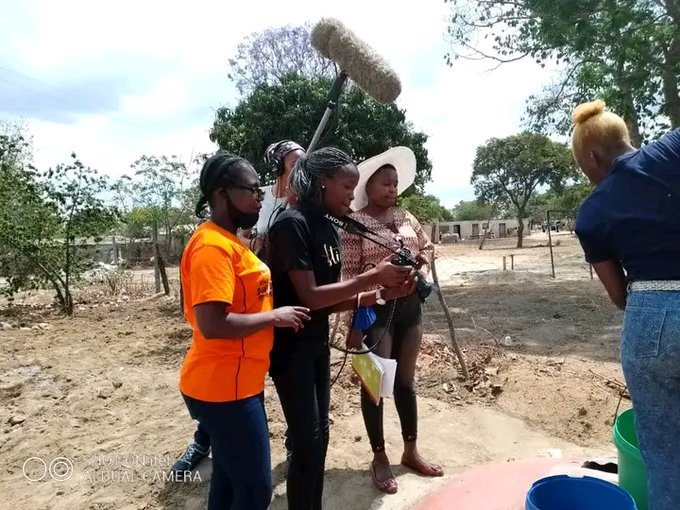
WILD TRACK SPECIAL: The Picture My Life Project (PML) Women's audiovisual narratives contribute to eradicating Violence against Women and Girls in Zimbabwe

WILD TRACK SPECIAL

The Picture My Life Project (PML)

Women's audiovisual narratives contribute to eradicating Violence against Women and Girls in Zimbabwe

PRESS RELEASE

GBV Edition
post: P.O. BOX BW 1550, Harare
email: info@icapatrust.org
phone: +263 242 862 355

To start off 2021 ICAPA Trust is pleased to publish this special Picture my Life Newsletter.
 
The Picture My Life Programme continued in 2020, at a time when GBV cases increased due to the Covid-19 related lockdown in Zimbabwe.
 
PICTURE MY LIFE 2020
 
Women's audiovisual narratives contribute to eradicating
Violence against Women and Girls in Zimbabwe

The Picture My Life Project (PML) created and used audio-visual content to upscale the '#MeToo' Campaign in Zimbabwe, as well as also campaigning against other forms of injustices that women are confronted with.

22 September 2020

African Women Filmmakers Hub invitation to apply for the Trojan Horse Was a Unicorn THU Career Camp

AFRICAN WOMEN FILMMAKERS HUB

PRESS RELEASE

African Women Filmmakers, here's a big opportunity to attend the THU Career Camp digitally, brought to you by the African Women Filmmakers Hub. THU is a Portuguese company looking to diversify all areas of digital entertainment creation.


THE AFRICAN WOMEN FILMMAKERS HUB

Invites you to apply for

The TROJAN HORSE WAS A UNICORN CAREER CAMP

TROJAN HORSE WAS A UNICORN (THU) empowers creators from every area of the digital entertainment industry. This year the focus is on Africa with an exciting invitation to African women digital entertainment creators through the AFRICAN WOMEN FILMMAKERS HUB (AWFH) to participate at the annual THU Career Camp.

To be eligible, you must be early in your career, or have come to a stagnant point in your career and be in red of a breakthrough opportunity. There is no age limit!

Dates for the THU Career Camp are November 11, 12, 13 2020

Opportunities at the Career Camp include:
- career guidance with professionals from international companies
- mentoring
- membership of the THU Tribe, including international companies, for one with further networking opportunities
- job opportunities

If you are involved in gaming, content (film & TV), animation, technical services, visual effects, or any other area of digital entertainment
Apply with your two page profile including the information:
1. Name
2. Age
3. Years of professional experience
4. Current occupation
5. Training
6. Work experience
7. Portfolio or links of you work (if you have one. You may apply without it if you do not)
8. One paragraph about your motivation to be part of the THU Career Camp.
9. Three areas you would like to be mentored in or receive guidance in.

Send a cover email with your profile as a .docx or .pdf attachment (if you have a portfolio, this should be sent in a separate .pdf file)

to: reception@icapatrust.org

by: 1800CAT, Monday 28 October.

with: THU Career Camp and your name in the subject (e.g. THU Career Camp Zama Moyo)

Only successful candidates will be notified.

ALSO SEE ON THE AFRICAN WOMEN IN CINEMA BLOG:
Report on the Launch of African Women Filmmakers Hub (Harare, Zimbabwe)

19 July 2020

Women Filmmakers of Zimbabwe (WFOZ) - Stakeholders Report 2019: Eradicating Violence against Women and Girls through mainstream women’s audio visual narratives in marginalised urban and rural communities

Women Filmmakers of Zimbabwe
WFOZ
Stakeholders Report 2019

Eradicating Violence against Women and Girls through mainstream women’s audio visual narratives in marginalised urban and rural communities

This report summarises the findings of the project by Women Film Makers of Zimbabwe (WFOZ) on Eradicating Violence against Women and Girls through mainstreaming women’s audio visual narratives in marginalised urban and rural communities.

***

The methodologies adopted for this analysis included surveys and interviews. Films that involve violence against women and girls were sought and screened in different communities, followed by discussions. The films were used as tools to gather information in the communities’s understanding of VAWG as well as to raise awareness on issues and impacts of VAWG. A monitoring and evaluation exercise that measures changes before and after the screenings was also
carried out.

***

The purpose of the report is to share information gathered from communities engaged to prevent and obtain feedback on how WFOZ methodologies can be used in the future.

SEE COMPLETE DOCUMENT AT :


21 November 2019

The Africa Women Filmmakers Trust (AWFT): Using participatory media in development communication

The Africa Women Filmmakers Trust (AWFT) Using participatory media in development communication

The Africa Women Filmmakers Trust (AWFT), created in 1992 by founding members Tendai Munawa, Rebecca Kapenzi and Chido Matewa, works to advance gender equality and justice through the use of information and communication technologies by facilitating content production and dissemination that supports girls, women and disadvantaged communities to take informed choices. 

Taking into cognizance that information communication technologies are a gendered tool, AWFT strives to address imbalances in the access and use of ICT’s hence the adoption of the participatory approach which is empowering to its subjects, giving them a voice hence becoming protagonists of their own development.

The AWFT website provides important resources for those interested in deepening their knowledge of empowerment through participatory media. In addition, it presents AWFT ongoing and completed projects, testimonies and other useful information. 

Chido Matewa’s doctoral thesis entitled "Media and the empowerment of communities for social change" (2002) PDF, which makes a case-study on the Zimbabwean-based Africa Women Filmmakers Trust, offers further research on the important role that media women have played in the use of communication technologies as a tool for empowerment.

24 August 2019

Joyce Jenje-Makwenda - Women in Film and Television in Zimbabwe: Modern Storytellers

Joyce Jenje-Makwenda - Women in Film and Television in Zimbabwe: Modern Storytellers

Joyce Jenje-Makwenda talks about her evolution as an oral-visual storyteller and how it has prepared her for the research on her forthcoming book, Women in Film and Television in Zimbabwe: Modern Storytellers.

Interview with Joyce Jenje-Makwenda by Beti Ellerson (June 2019)

Joyce, please tell us a bit about yourself.

Actually, flashback 50 years ago I would have said, “I want to be an actor and singer when I grow up.” That is what I wanted to be despite growing up in the township, where black people lived because of race relations in Zimbabwe, which divided people according to race/colour. I really don’t know how I imagined I could be an actor and a singer growing up in a place where there were no opportunities, since basic things, like education, were a struggle. But I wanted to be an actor, I guess as they say, artists are chosen, so I was chosen to do what I am doing when I came into this world! However I had to travel a certain path, which sort of took me away from what I can call active cinema for a while. Maybe to explain this let me chronicle the road I have travelled to where I am regarding cinema.

In the late 70’s I was a member of a theatre group in Mbare and we made the production, “Poor Chaminuka”, about the Prophet Chaminuka who had prophesied that the country Zimbabwe would be invaded by the white people. Since it was produced at the height of the war in 1979, we considered adapting it as a film but did not have the resources. Independence came the next year and while I was celebrating independence I became a fulltime mother, but the germ kept biting. In 1984 when I was expecting my fourth child I decided to do research on our early popular music, at first it was seen as ‘what pregnant women do, they do crazy things.’ When I gave birth I continued and then people saw that I was serious. What I wanted to do, quite simply, was to document the history of our popular music, which originated in the townships.

My paternal grandparents, who were among the early urban settlers, came into the city in 1931 and witnessed how the music unfolded. My father used to tell me about his music, comparing it to the music of my generation: rock, pop and soul. He was really worried when he heard me listening to rock, which was seen as radical music; rock culture was viewed as changing the status quo: everything from education, fashion, religion. I think he tried to neutralise my music with his own, which was also influenced by jazz music. I remember him talking about how they would sit and listen to “good music” and how they would dress properly for the occasion; here he was comparing my rock style dressing with his. Jazz was/is seen as music for the sophisticates and to him my rock culture dressing was to be corrected. Township jazz was associated mostly with the middle class and, by township standards my parents and grandparents were in that category. To them, rock culture was misplaced. One day as I was going to a bioscope (movie theatre), dressed in hippy fashion—in a top which left my stomach bare, in a mini-skirt in which I could hardly bend, platform shoes, an afro—my father asked me whether I had finished dressing, and it was then that he would compare their time and ours: the teenagers of the 70’s rock era. 

However my parents did encouraged me to sing, especially when they heard my renditions of Diana Ross, who became my idol; and was also one of the few African American women actors in the 70’s. I also liked her as an actor and imagined that I could act just like her—and be both a singer and actor.

Anyway, returning to my conversations with my father in the 70’s, every time that I was going somewhere and I wanted to ask for money, I would say to him, ‘tell me about your music’ and he would say, ‘you want some money, here is the money,’ Sometimes he would tell me about his music, sometimes he would do so with his brother, and other times with my mother. I didn’t realise that all these stories were being stored in my mind, and that I would later offload the file. It is the conversations that I had with my father that made me want to understand the history of our popular music. I did not know that the research that I had started was going to be a lifetime project and it was through music that I came to understand the world. It was through music that I became the first female independent film/television documentary producer.

In fact, your experiences are indicative of many African women cultural producers, who wear many hats, who are themselves artists, who draw from their own artistic experiences to disseminate this cultural knowledge and validate it through archiving and documenting, notably using the medium of film. What drove you to continue what has become a lifetime project?

When I started the research on township music I was a homemaker who was into fashion designing, doing very well with my dress designing business. When the calling to conduct research into township music grew strong I had to stop dress design. Embarking on the research on township music needed some money, so I resorted to making some samosas in order to fund my research. Then institutions and individuals got interested in what I was doing and invited me to talk about my research, though I regarded it at the time as a hobby. I would tell them that collection of my township music was just a hobby, but they would say that I was the only person doing this research and it would be good to talk about it.

I was invited to universities, conferences, embassies, cultural spaces, but my big first break came when I was invited in Sweden at the Audio Visual Archives. By then I had collected music from the 1930's and films from the 1940's, my presentation garnered a great deal of attention and the conference organisers asked me who was funding my research. When I replied that I made samosas to fund it, they looked at each other in disbelief, replying ‘you don’t fund such a project with samosas!’ They then advised me to go to the Nordic embassies of Sweden, Finland and Norway; the latter in fact, provided me the funding to complete my research.

After completing the research they asked me what I wanted to do with the findings. I said that I wanted to write a book and then make a documentary; they suggested that I start with a documentary because of the films, music and interviews that had already been collected. I told them that because I had never made a film, I would first need to know the process. They had already read my newspaper articles, and suggested that these documents could actually serve as the script. The women at the Norwegian Embassy were especially supportive, accompanying me to outlets where I could hire equipment. With the support of the Norwegian embassy, the film, journalism community in Zimbabwe and my family I became the producer/director of the documentary, Zimbabwe Township Music, which launched me into my role as filmmaker. The documentary got very good reviews and yet it was my very first time to produce and direct a documentary.

Well this is common among many women who use filmmaking as a means to document their stories, many having never made a film before, nor had training in filmmaking. How did your foray into film production evolve? 

In fact, I was not familiar with the lexicon of film terms; I have always said that I simply used my kitchen language. I would say to the cameraperson I want that person to be big, or small, or make them move whichever way I wanted. I did not know the terms: wide shot, medium shot, high angle, all this jargon, I did not have it, I was lucky that the cameraperson I worked with was very accommodating. However some camerapersons that I worked with later, would ask, ‘what is this women saying?’ and I would tell them that if you do not understand what this woman is saying then please leave. This made me realise why women have not always felt comfortable in the role of film producer and director, it is because of this jargon, and yet women are the greatest storytellers. I said to myself, ‘this jargon will not stop me from telling my story.’ I came to understand why many women were apprehensive regarding modern ways of storytelling because of this kind of intimidation, which I could not tolerate, because I wanted to tell my story just like how my grandmother told stories; technology and rude technical people were not going to deter me.

My documentaries have won awards, starting with the Zimbabwe Township Music Award. The day it was aired on Zimbabwe Television, on 26 December 1992, people called asking to speak to me, people left letters and some left money in my letterbox to congratulate me. I got very good reviews from the media. I became a producer, director, among other positions, over night, and because of its success, I was invited to talk at a variety of institutions. Today I have produced a number of documentaries and I am in the process of editing about 30 documentaries that I have been filming for some time. 

The “Joyce Jenje Archives” is an important contribution to the cultural production of Zimbabwe, especially as it demonstrates the ability to create structures to access information and knowledge. How did this initiative come about? What are its goals and objectives?

The project was concretised when I had amassed and collected a lot of interviews and artefacts over the past 35 years. As I stated before, when I was going about carrying out interviews I did not know that I was creating an archive. The work needed to be housed in its own space and not in my house as it had grown to be an institution and it needed its own place; that is when the idea of an archive came into place. I decided to have this in my two-bedroom cottage, which is now a three-room space as I have added another room. The archive consists of interviews in audio and video, there are photos of some of the interviewees, and their stories go as far back as the 1930’s. The research is on music, politics, women’s histories, sex and sexuality and more. Some of the artefacts that I have collected are typewriters from the 1930’s to 2000, LP’s--about 7,000, radios and gramophone, black and white televisions, I have also donated my very first car to the archives/museum. There is also a room dedicated to the Mattaka Family and Township Jazz, the Mattaka Family deposited instruments dating as far back as the 1930’s – guitars, typewriters, and more. The archives/museum has given an opportunity for people from all walks of life to understand where they have come from.

You have stated: “Film is one of the arts disciplines that women use as a way of communicating their artistic expressions and also as a tool for change.” What are your observations, especially as it relates to Zimbabwe.

Women were the custodians of our culture in Pasichigare/Endulo, the precolonial era; they educated, informed and entertained children, the family and the community through storytelling. Presently, one of the modern ways of storytelling is through film, and women are using it as a tool for change and also to chart their own path. I alluded to this above when describing my own journey. Film just like any of the arts disciplines it is a tool used by women to express themselves; film is the mother of arts disciplines because everything is found in film: music, acting, fashion, you name it, film becomes the best vehicle for women to express themselves. In Pasichigare/Endulo women would also mix the story with a song, as a way to celebrate, to express their pain and concerns, and as a means to find a solution.

Traditionally, women were in a powerful position in society, they had their space, which allowed them to do this and issues affecting them would be discussed. Today women have managed to express this through film, as they deal with contemporary cultural, social and political issues. In addition to working in acting roles, women are now producers and directors; they own the means of production and call the shots rather than being told what to do. Holding positions of influence in film has made it possible for women to do what women in Pasichigare/Endulo used to do, women today have created their own spaces and this has given them a stronger voice.

You are currently completing a book on the subject of Zimbabwean women in cinema, Women in Film and Television in Zimbabwe: Modern Storytellers. Could you talk a bit about the contents?

My book shares women’s stories, women talking about their experience in film. I have interviewed about 60 women dating from the 1950’s to the present. 

The book is organised into eight chapters. In Chapter 1, the introduction, I explain film and the context that Zimbabwean women practice it, and looking at different eras since the 1950s, how they have evolved in film. Chapter 2 explores pre-colonial and modern day storytelling. Chapter 3 examines the transition from film to television. Chapter 4 focuses on independent producers. Chapter 5 presents biographies of women in film and television, outlined chronologically, 60 women are featured. The focus on Chapter 6 is film education. Chapter 7 is devoted to fundraising and Chapter 8 on women’s film organisations.

I have observed a very active and powerful oral-visual grassroots movement among women in Zimbabwe. Would you agree with my assessment? I say this in the sense that while there is not an international media focus on the oral-visual culture of Zimbabwe, it is active, present and very much alive.

In Zimbabwe almost every person is an artist and as I have already mentioned, women are custodians of our society and hence as cultural producers they are problem solvers. They work on solutions for themselves and for their communities. 

Some reflections on the role you play as cultural producer…

Because I am interested in culture, my role as cultural producer is to record, preserve and disseminate our culture in a dynamic way using all forms of documentation and storytelling. Having worn many hats in the media and in the arts definitely makes my role as cultural producer especially meaningful. 

25 April 2019

The first two of Zimbabwean #MeToo stories produced by WFOZ: "Picture My Life Story" 1 and 2 from ICAPA on Vimeo

The first two of Zimbabwean #MeToo stories produced by WFOZ: Picture My Life Story 1 and 2 from ICAPA on Vimeo 

These Zimbabwean #MeToo stories break the silence of all forms of violence against women, allowing the survivor's stories to be told. Inspired by the Breaking the Silence project of the Institute of Creative Arts for Progress in Africa (ICAPA): The project seeks to give space to survivors of any form of violence and for whatever reason to speak out through different forms of art. The project's aim is to BREAK THE SILENCE SO AS TO BREAK THE CYCLE.

Formed in 1996, Women Filmmakers of Zimbabwe's general objective is to increase the participation of women in the film industry in the country.


Picture My Life Story 1 from ICAPA


Picture My Life Story 2 from ICAPA


20 August 2018

IIFF 2018 – International Images Film Festival for Women (Harare) : Mukanya, Siza Mukwedini, Zimbabwe

International Images Film Festival
for Women
(Harare)

IIFF 2018

Mukanya, 2018
Siza Mukwedini
Zimbabwe 


SYNOPSIS

From a past marred by drunkenness and violence, the village menace, Mukanya, embarks on a journey to redeem himself by saving his son, who has become a reflection of Mukanya’s failures as a father. This is the journey of two men transforming into fathers. This film inspires conversations around the state of Zimbabwean as well as African fathers in the face of patriarchy and changing perspectives of what fatherhood is all about. A Conversations with our Fathers Project.

BIOGRAPHY

Siza Mukwedini has over 10 years' experience in documentary film production. Her main focus is development, with a focus on sharing inspirational stories that encourage development and social cohesion in Zimbabwe. She has worked with the Zimbabwe Farmers’ Union highlighting success stories in agriculture. The program has also encouraged a lot of young people to turn to agriculture as a source of employment. Siza is an amazing storyteller and uses new media like film and photography. She mostly films and edits her own documentaries. Selected in 2015 to participate in the Mandela Washington Fellowship for Young African Leaders in the United States, upon completion of the Fellowshipher objective is to inspire Zimbabwe and Africa to realize the vast potential they have through creating her inspirational films. She believes the first step to effectively fostering social and economic development is inspiring the mind and aims to partner with some of Africa’s greatest minds she will have the chance of meeting through the Fellowship to achieve her vision.
Source: https://www.irex.org/people/sizhakele-martha-mukwedini-siza

18 August 2018

International Images Film Festival for Women - Harare, Zimbabwe

INTERNATIONAL IMAGES FILM FESTIVAL
FOR WOMEN
2018
FESTIVAL DATES: August 24th to 31st, 2018 in Harare

IIFF is an internationally recognized festival held to inspire positive images of women, interrogate, debate and celebrate the world of women, as well as the communities that women live in through films that exhibit gender sensitive narratives.

IIFF was founded in 2002 by Women Filmmakers of Zimbabwe in response to the proliferation of beauty contests at that time. Each year, a selection of films is featured to interroglate, debate and celebrate the resilience of women against many odds and nevertheless their contribution to society and history.

The idea of a woman's film festival came to mind because gender is really one of the components of film that we need to look into very closely to see how films are affecting our world, and affecting our behaviour, especially our behaviour in gendered relationships.--Tsitsi Dangarembga, Festival Founder.


FILM LINE UP FOR 2018

A Beautiful Woman, Seyed Sajad Moosavi, Iran 
A Serenade for Fanny, Monique Marmodée, Germany, 2018
Accra Power,  Sandra Krampelhuber & Andrea Verena Strasser, Austria, 2017
Because Of The War, Toni Shapiro-Phim, USA, 2018
Bhizautaure Raarthur, Tafadzwa Chiiriga, Zimbabwe, 2018
Burkinabé Rising, Iara Lee, Brazil, 2017
Chicks on Boards, Dörthe Eickelberg, Germany, 2018
Outreach Film: Damaru, Agbor Obed Agbor, Cameroon, 2014
Outreach Film: E Do (Enough), Nkanya Nkwai, Cameroon, 2016
Elevate, Hamida Issa, Qatar, 2017
Growing Up, Clara Martínez-Lázaro, Spain, 2018
Leaking Blue (Azul vazante), Julia Alquéres, Brazil, 2017
Leprosy, Alimohammad Eghbaldar, Iran, 2018
Making Ends Meet, Thomas Muziyirwa, Zimbabwe, 2018
Marriage is a Choice, South Sudan
Online Shopping, Ghasideh Golmakani, Iran, 2017
Rise from the Ashes, Gracie Phoenix, USA, 2018
Outreach Film: Ruvimbo's Wedding, Ben Mahaka, Zimbabwe, 2017
She Is King, Gersh Kgamedi, South Africa, 2017
Somebody Clap For Me, Luciana Ceccatto Farah, Brazil, 2018
Tamala, Goodhope Elieskia, Tanzania, 2017
The Sound of Silence, Bina Paul, India, 2017
Tyranny Of Distance, Gabriel Diamond, USA, 2017
Underpressure, Lilli Schwabe, Austria, 2017
Veer, Mariama Slåttøy and Sveinung, Norway, 2017
Veil Done, Juhi Bhatt, India, 2018
Volar (Flying), Bertha Gaztelumendi, Spain, 2017

SYNOPSES

A Beautiful Woman, Seyed Sajad Moosavi, Iran 
A beautiful woman and an uncertain future loom ahead of two girls and a court.

A Serenade for Fanny, Monique Marmodée, Germany, 2018
A Serenade for Fanny“ is a modern, inventive and entertaining documentary film about personal identity and sense of belonging, the bond between generations and the power of big dreams.
Together with the charming Fanny (90), who was resettled from former Yugoslavia at the beginning of the Second World War and her ambitious granddaughter Alex (30) from Germany, we invite the audience on a journey through the life of two powerful ladies of totally different generations. They will learn about female role models, and how they have changed in the last century. They will get a feeling about what it means to loose home, family and to be forced to build up a new existence in a foreign country. And they will be inspired by how strong your personal impact on life can be when you have the strength to carry on. “A Serenade for Fanny“ should encourage everyone to show persistence in hard times, to break free of social conventions and to believe in dreams when they come to you - no matter how old you are!

Accra Power,  Sandra Krampelhuber & Andrea Verena Strasser, Austria, 2017
Accra Power provides an eclectic mix of perceptions of power in one of many thriving urban settings Africa’s. It outlines creative and artistic strategies of young Ghanaians situated at the crossroads of tradition and various belief systems, high technological and economic growth, infrastructural deficits and current energy crisis.

Aya, Moufida Fedhila, Tunisia, 2018
In Tunis a smart little girl Aya, lives with her Salafist parents. But one day a special event disrupts the life of this family. And then Aya manages to save her family from fanaticism.

Because Of The War, Toni Shapiro-Phim, USA, 2018
In both West Africa and North America, four Liberian women have been using their music to address injustice and inspire action for social change. Survivors of Liberia’s civil wars, they are accomplished, brilliant singers – as well as mothers, refugees, immigrants, Africans – who haven’t stopped contributing positively to the world, no matter the obstacles.

Because of the War documents the power of traditional songs to make meaningful connections between and among people, and to help re-build communities impacted by violence and migration.

Bhizautaure Raarthur, Tafadzwa Chiiriga, Zimbabwe, 2018
A grieving mother seeks to remove a curse brought on by her son's suicide, while her younger sons grapple to understand the meaning of his death.

Burkinabé Rising, Iara Lee, Brazil, 2017
Burkinabè Rising, a new documentary from Cultures of Resistance Films, showcases creative nonviolent resistance in Burkina Faso. A small, landlocked country in West Africa, Burkina Faso is home to a vibrant community of artists and engaged citizens, who provide an example of the type of political change that can be achieved when people come together. It is an inspiration, not only to the rest of Africa but also to the rest of the world.

Through music, film, ecology, visual art, and architecture, the people featured in this film are carrying on the revolutionary spirit of Thomas Sankara. After assuming the presidency in 1983, Sankara was killed in a 1987 coup d'état led by his friend and close advisor Blaise Compaoré, who subsequently ruled the country as an autocrat for twenty-seven years. In October 2014, a massive popular insurrection led to his removal. Today, the spirit of resistance is mightier than ever in Burkina Faso.

In the fall of 2016, director Iara Lee traveled throughout the country to film Burkinabè Rising. Through this journey, she met a remarkable cast of artists, musicians, and activists who are using the country's artistic traditions to propel forward a message of resistance: Joey le Soldat, a rapper, infuses his lyrics with references to the struggles of the impoverished youth in Ouagadougou, the country's capital, as well as those of the farmers who toil in the country outside. Marto, Burkina Faso's most well-known graffiti artist, turns barren city walls into colorful murals decrying injustice. Malika la Slameuse, a women's rights activist, performs slam poetry that offers a feminist perspective on a male-dominated art form. Serge Aimé Coulibaly uses dance as a form of political resistance, with movement borne from a need to speak out and take action.

In addition to profiling individual artists, Burkinabè Rising documents a festival of recycled art and interviews groups of farmers who are standing up to the incroachment of corporate agriculture. Displaying a panorama of creative resistance, the film shows how the resurgent Burkinabè pursuit of peace and justice manifests itself through cultural expression, permeating every aspect of daily life.

Chicks on Boards, Dörthe Eickelberg, Germany, 2018
Surfing is like an ode to a life in freedom. But the freedom experienced between ocean and sky runs into its limits on land. Women on surfboards are considered an insult across many cultures. But there are a few who go surfing anyway: Chicks on Boards. Because Surfing is more than a sport: it’s a movement.

Outreach Film: Damaru, Agbor Obed Agbor Cameroon, 2014
From the abyss of despair, a young deaf girl strives to achieve her earnest desire for special education. But first, she has to overcome the eccentricities of her society.

Outreach Film: E Do (Enough), Nkanya Nkwai, Cameroon, 2016
E Do is a story of domestic violence following the life of a little girl, living in a chaotic household with duelling parents. The effect of this trauma follows her though scarring here physically and emotionally until she becomes the unintended victim.

Elevate, Hamida Issa, Qatar, 2017
After a hard day’s shopping, Latifa, a rude and vain woman and her long-suffering maid Rosie get trapped in an elevator. Already haughty and dismissive, Latifa becomes downright nasty in her treatment of Rosie, even going so far as to blame her for the mechanical failure. This brings emotions to a head, and Latifa goes on a journey in her mind, in which she confronts her own egotistical nature and rediscovers the lessons of humility and respect she learned as a child.

Growing Up, Clara Martínez-Lázaro, Spain, 2018
Emma wakes up in her thirties to find herself a loser when her best friend Lola asks her to be the guardian of her about to be born child.

H'na Barra (Us, Outside), Bahïa Bencheikh-El-Fegoun, Meriem Achour Bouakkaz Algeria, 2014
A male public space, women’s bodies that disturb.
Neither men nor women know what to do with this female body, so it gets veiled.
This film is the encounter between women in a quest for meaning who question themselves to confront their individual histories.
Who are they today faced with a society rife with confusion that “does not know what to do” as they are present in ever greater numbers in this public space?
A society permeated by religious convictions on the one hand and by ignorance on the other that makes women a permanent target.

Leaking Blue (Azul vazante), Julia Alquéres, Brazil, 2017
A mother looks for her son in a hospital bed. She finds her daughter instead. Between shores and tides, blue leaks from the core.

Leprosy, Alimohammad Eghbaldar, Iran, 2018
On his wedding night, and with his honour at stake, the groom drags her bride to hospital to figure out, through medical diagnosis, the thing that is usually supposed to happen on such a night, BUT DOESN'T.

Making Ends Meet, Thomas Muziyirwa, Zimbabwe, 2018
A documentary on survival in Zimbabwe a country stricken by a high unemployment rate of about 95% which is the highest in the world. People live by resisting law enforced by authorities and survive by any means possible just to make ends meet. The film delves deep on how Zimbabweans are managing to survive in hard economic condition that has been prevailing for the past 10 years. The film follows activists and general citizens as they stage protests against hostile government policies in pursuit of a better Zimbabwe. The police are waging war from all sorts of battle fronts, but an up rise has begun mounting pressure on Robert Mugabe’s government. Series of protests are imaging from deferent pressure groups but the government is in no mood to negotiate, but respond with crackdowns. For the Police and the municipality, it’s a fight to maintain order and sanity in this what was once called the Sunshine City, while for the citizens its scuffle for survival in a country that is reeling with High unemployment rate (of over 80 percent) and the economy is seemingly on a free fall.

Marie Madeleine: A Female Chief, Florence Ayisi, Cameroon, 2018
A woman is to be enthroned as chief in Nkol Ngock I, a small village in Cameroon. This is a rare occurrence in most African societies where the position of chief is customarily handed down from father to son. This documentary presents a rare glimpse into a community undergoing change. Social attitudes towards gender equality are changing, as men openly acknowledge and speak about the importance of women in development. One man says "women are doing more to encourage development than men. I believe a female chief will bring new things."

Even though some villagers consider Marie-Madeleine a 'stranger' because she lives in the capital city of Yaoundé, she is determined to learn about her culture and integrate into village life.

As Marie-Madeleine beats the real African drum on her enthronement day, the gentle sounds signal a break with tradition. It is the dawn of a new era in the village of Nkol Ngock I; a Woman will be their traditional leader. Residents are optimistic that she will bring much needed development to the village.

Marriage is a Choice, South Sudan
This is a story from South Sudan about a university girl who wants to get married, but her father cant allow her to marry from the tribe she has loved. She tried to convince her father. Will she be granted permission to married from that tribe?

Mukanya, Siza Mukwedini, Zimbabwe, 2018
From a past marred by drunkenness and violence, the village menace, Mukanya, embarks on a journey to redeem himself by saving his son, who has become a reflection of Mukanya’s failures as a father. This is the journey of two men transforming into fathers. This film inspires conversations around the state of Zimbabwean as well as African fathers in the face of patriarchy and changing perspectives of what fatherhood is all about. A Conversations with our Fathers Project.

Nyasaland, Joyce Mhango Chavula, Malawi, 2018
A very successful and independent young woman returns to her village to see her ill father only to find him dead and buried. What follows is her encounter with the hyena that is terrorising the village and it happens to be a human being. With the help of a young man she takes the hyena head on and saves her village.

Online Shopping, Ghasideh Golmakani, Iran, 2017
Donia, a young girl wants to immigrate for continuing her studies abroad. Before she leaves Iran, she tries to sell her belongings online. One of the custumer is a man who enters in her house and behaves strangely...

Rise from the Ashes, Gracie Phoenix, USA, 2018
This film is based on a true story about Narcissism, the marriage that she suffered through and the journey of how she met her ex- husband.

Outreach Film: Ruvimbo's Wedding, Ben Mahaka, Zimbabwe, 2017
Ruvimbo's wedding is a short film about child marriages. The film was written and directed by Ben Mahaka with music by Hope Masike and poetry by Chirikure Chirikure.

She Is King, Gersh Kgamedi, South Africa, 2017
Khanyisile is a talented Singer/Dancer/Actor who wants to be a star. She travels from her home in Nongoma to audition for a new musical to be staged at the Joburg Theatre based on the life of Zulu Queen Mkabayi ka Jama, King Shaka’s aunt.

Will she be able to keep up with her more seasoned fellow performers, avoid the jealous machinations of the aging leading lady and survive the punishing rehearsal schedule to make it to opening night and shine like the star she is?

“She is King” is a joyous celebration of Zulu culture in a glossy contemporary setting, showing off Joburg as the "Broadway of Africa". Think “Smash” meets “Lion King”.

Somebody Clap For Me, Luciana Ceccatto Farah, Brazil, 2018
This poetic rollercoaster ride chronicles Ugandan youth reclaiming their right to a voice by bringing village bonfire traditions to an urban setting.

One of these young freedom of speech activists is Ugly Emcee, a social worker who also happens to be a grandson of the late dictator Idi Amin Dada.

Through an unsettling meta-layer, these eclectic individual portraits combine to form a vision of a country trying to shed its past and build a more democratic reality, despite the conservative forces latching on to power.

Outreach Film: Sound Of Tears, Dorothy A. Atabong, Canada, 2015
A young woman from a patriarchal community is forced into an arranged marriage to save the family honor. Amina and her family have fled the city to escape her estranged lover Josh and the stamp of shame from their patriarchal community; but Josh tracks them down.

Tamala, Goodhope Elieskia, Tanzania, 2017
After her parents die, Tamala (15) is taken from the village to go work in the city where she struggles with violence and sexual harassment. She then decides to turn to the street for little comfort. The streets aren’t so nice for street children but Tamala fights her best fight in order to return to her grandmother back in the village.

The Sound of Silence, Bina Paul, India, 2017
The Samaagathi Report on extreme gender discrimination on campuses across Kerala created a furore, as most Vice Chancellors went into denial, calling it false and prejudiced. The Film travels through campuses, speaking to women, providing glimpses into their lives, experiences of routine discrimination and the culture of silence around the injustice, while discovering that their spirit cannot be contained!

Tyranny Of Distance, Gabriel Diamond, USA, 2017
Fifteen years of civil war in Liberia has resulted in one of the world’s worst doctor shortages and cut off the country’s rural poor from basic healthcare. Community health workers trained and equipped by the non-profit Last Mile Health are working to deliver lifesaving health services to the 1.2 million Liberians living in the most remote reaches of the country.

Underpressure, Lilli Schwabe, Austria, 2017
Clara, an aspiring gynecologist, is enthusiastically supporting her patients, no matter if they are bringing a child into the world or are making the decision to have an abortion. At the same time, she is attempting to be a good wife and loving mother to her two little children. However, with the increasing pressures of daily life, her self imposed belief systems are beginning to falter, her duties in the clinic suddenly seem insurmountable and her family life is slipping away.

Veer, Mariama Slåttøy and Sveinung, Norway, 2017
Virvel / Veer is a poetic dance short film about ruling and being ruled.

Veil Done, Juhi Bhatt, India, 2018
Shah Jahan is fed up of people calling her fat. Mehru Nisha longs to step out of the house. Afroz Jamala is terrified of growing numbness in her hands. Three women from Nizamuddin basti, Delhi, take a decision that sets them on a journey to find themselves – they join a gym.

Volar (Flying), Bertha Gaztelumendi, Spain, 2017
Volar (Flying) gathers nine survivors of gender violence, among whom there is an architect, a university professor, a cleaning lady and a student. They all share a weekend in the countryside, in the heart of the Basque Country. That is where we gather their testimonies, their conversations on their past of violence as well as a message of hope and their experience overcoming what they had gone through.


Blog Archive